
Phishing Analysis
Detailed analysis of captured phishing page
Visual Capture
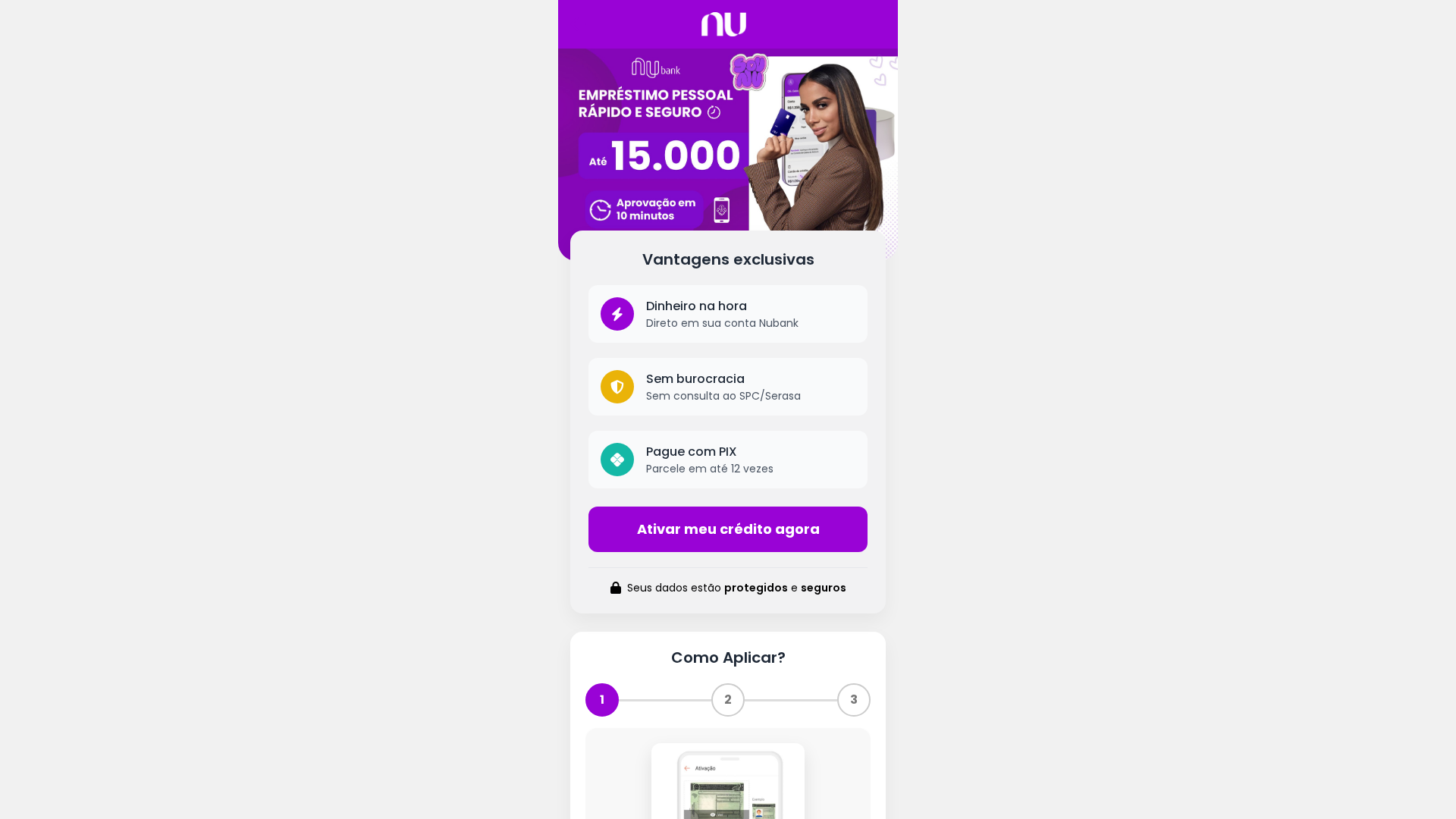
Detection Info
https://emprestimoliberado.com/aa/inicio/01/
Detected Brand
Nubank
Country
International
Confidence
100%
HTTP Status
200
Report ID
06c484d8-09b…
Analyzed
2026-02-12 13:52
Content Hashes (HTML Similarity)
Used to detect similar phishing pages based on HTML content
| Algorithm | Hash Value |
|---|---|
|
CONTENT
TLSH
|
T1F832EB7072901ABB91CBD2E1B275AF5A72C8CB4BCA5BD701A3F983845FC7C92DD48254 |
|
CONTENT
ssdeep
|
192:hZLLSPaLKGHnC//swsIwaocZ4J3u5uxTRWAwzDfS:nL6QHnC3swRZITJRWAwzDq |
Visual Hashes (Screenshot Similarity)
Used to detect visually similar phishing pages based on screenshots
| Algorithm | Hash Value |
|---|---|
|
VISUAL
pHash
|
b3333333c9cc6664 |
|
VISUAL
aHash
|
e7e7e7ffe7e7ffff |
|
VISUAL
dHash
|
4d4d4d124c4d120a |
|
VISUAL
wHash
|
0707272f07072f3f |
|
VISUAL
colorHash
|
07200000030 |
|
VISUAL
cropResistant
|
4d4d4d124c4d120a,33f4d989f9e5cdd9 |
Code Analysis
Risk Score
76/100
Threat Level
ALTO
⚠️ Phishing Confirmed
🎣 Credential Harvester
🎣 OTP Stealer
🎣 Banking
🎣 Personal Info
🔬 Threat Analysis Report
• Threat: Phishing
• Target: Nubank customers
• Method: Impersonation and deceptive website
• Exfil: Likely steals personal and financial information. The javascript obfuscation could be part of the exfiltration strategy.
• Indicators: Domain mismatch, recent domain, brand impersonation
• Risk: High
🔒 Obfuscation Detected
- fromCharCode
- unicode_escape
🎯 Kit Endpoints
- https://evilmartians.com/chronicles/postcss-8-plugin-migration`),m.env.LANG&&m.env.LANG.startsWith(
- https://tailwindcss.com/docs/content-configuration#safelisting-classes
- https://tailwindcss.com`}),...e.nodes])},container:(()=
- https://tailwindcss.com/docs/content-configuration
- https://mths.be/cssesc
- https://tailwindcss.com/docs/content-configuration#discarding-classes
- https://tailwindcss.com/docs/upgrade-guide#prefix-cannot-be-a-function
- https://tailwindcss.com/docs/upgrade-guide#configure-content-sources
- https://tailwindcss.com/docs/using-with-preprocessors#nesting
- https://cdn.tailwindcss.com/
- https://searchapi.dnnl.live/consulta?cpf=${cpf}&token_api=2077`
- https://emprestimoliberado.com/aa/inicio/01/js/B7PYnCHDexx2.js
- https://tailwindcss.com/docs/upgrade-guide#remove-dark-mode-configuration
- https://www.w3ctech.com/topic/2226`));let
- https://tailwindcss.com/docs/content-configuration#pattern-recommendations
- https://twitter.com/browserslist
- https://tailwindcss.com/docs/upgrade-guide#replace-variants-with-layer
- https://tailwindcss.com/docs/installation
📡 API Calls Detected
- POST
📊 Risk Score Breakdown
Total Risk Score
90/100
Contributing Factors
Domain Age
The domain is very recent.
Brand Impersonation
The website uses Nubank's branding to deceive users.
Suspicious Content (Loan Offer)
Offering loans is a common phishing tactic.
🔬 Comprehensive Threat Analysis
Threat Type
Banking Credential Harvester
Target
Nubank users (International)
Attack Method
Brand impersonation + obfuscated JavaScript
Exfiltration Channel
Form submission (backend endpoint not detected - likely JavaScript-based)
Risk Assessment
HIGH - Automated credential harvesting with Form submission (backend endpoint not detected - likely JavaScript-based)
⚠️ Indicators of Compromise
- Kit types: Credential Harvester, OTP Stealer, Banking, Personal Info
- 18 obfuscation techniques
🏢 Brand Impersonation Analysis
Impersonated Brand
Nubank
Official Website
https://nubank.com.br
Fake Service
Personal Loans
Fraudulent Claims
⚔️ Attack Methodology
Primary Method: Phishing (Brand Impersonation)
The attackers are attempting to trick users into providing their personal and financial information by impersonating Nubank and offering loans. They are using a look-alike website with a misleading domain.
Secondary Method: JavaScript Obfuscation
The javascript obfuscation is designed to hide malicious code from detection tools and potentially deploy a keylogger or exfiltrate sensitive data
🌐 Infrastructure Indicators of Compromise
🦠 Malicious Files
Main File
B7PYnCHDexx2.js
File Size
📊 Attack Flow Diagram
1. Step 1: User lands on page with optional CPF in URL (pre-filled if present)
2. Step 2: User enters CPF and agrees to terms via processForm()
3. Step 3: consultarCPF() sends CPF to external API and receives full personal data (name, mother's name, birthdate, etc.)
4. Step 4: Data is displayed to user for 'confirmation' and stored in localStorage
5. Step 5: redirecionarParaChat() redirects to next phishing stage with all data preserved in localStorage and URL parameters
6. Step 6: Subsequent stages likely harvest banking credentials (not shown in this code)
🔬 JavaScript Deep Analysis
Operator Language
Portuguese (1%)
Total Code Size
411.1 KB
🔗 API Endpoints Detected
Other
6
🔐 Obfuscation Detected
- : Moderate
- : None
🤖 AI-Extracted Threat Intelligence
📊 Attack Flow
1. Step 1: User lands on page with optional CPF in URL (pre-filled if present)
2. Step 2: User enters CPF and agrees to terms via processForm()
3. Step 3: consultarCPF() sends CPF to external API and receives full personal data (name, mother's name, birthdate, etc.)
4. Step 4: Data is displayed to user for 'confirmation' and stored in localStorage
5. Step 5: redirecionarParaChat() redirects to next phishing stage with all data preserved in localStorage and URL parameters
6. Step 6: Subsequent stages likely harvest banking credentials (not shown in this code)
🎯 Malicious Files Identified
Main Drainer
B7PYnCHDexx2.jsFile Size
~15KB (based on provided code snippet)
Malicious Functions
consultarCPF()redirecionarParaChat()processForm()validateCPF()
Similar Websites
Pages with identical visual appearance (based on perceptual hash)
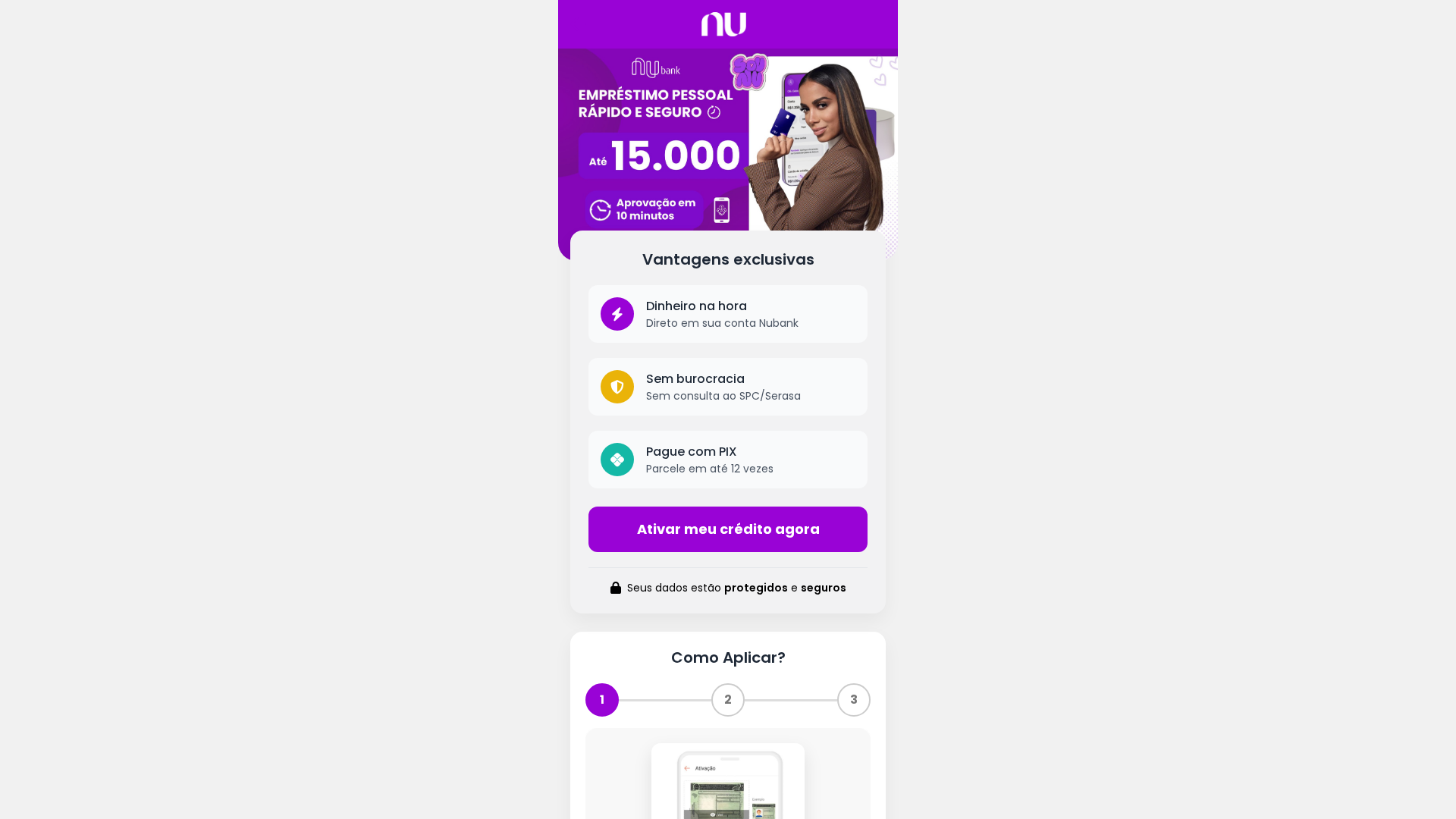
Nubank
https://atendimento.portal-seucredito.com/
Jun 25, 2026
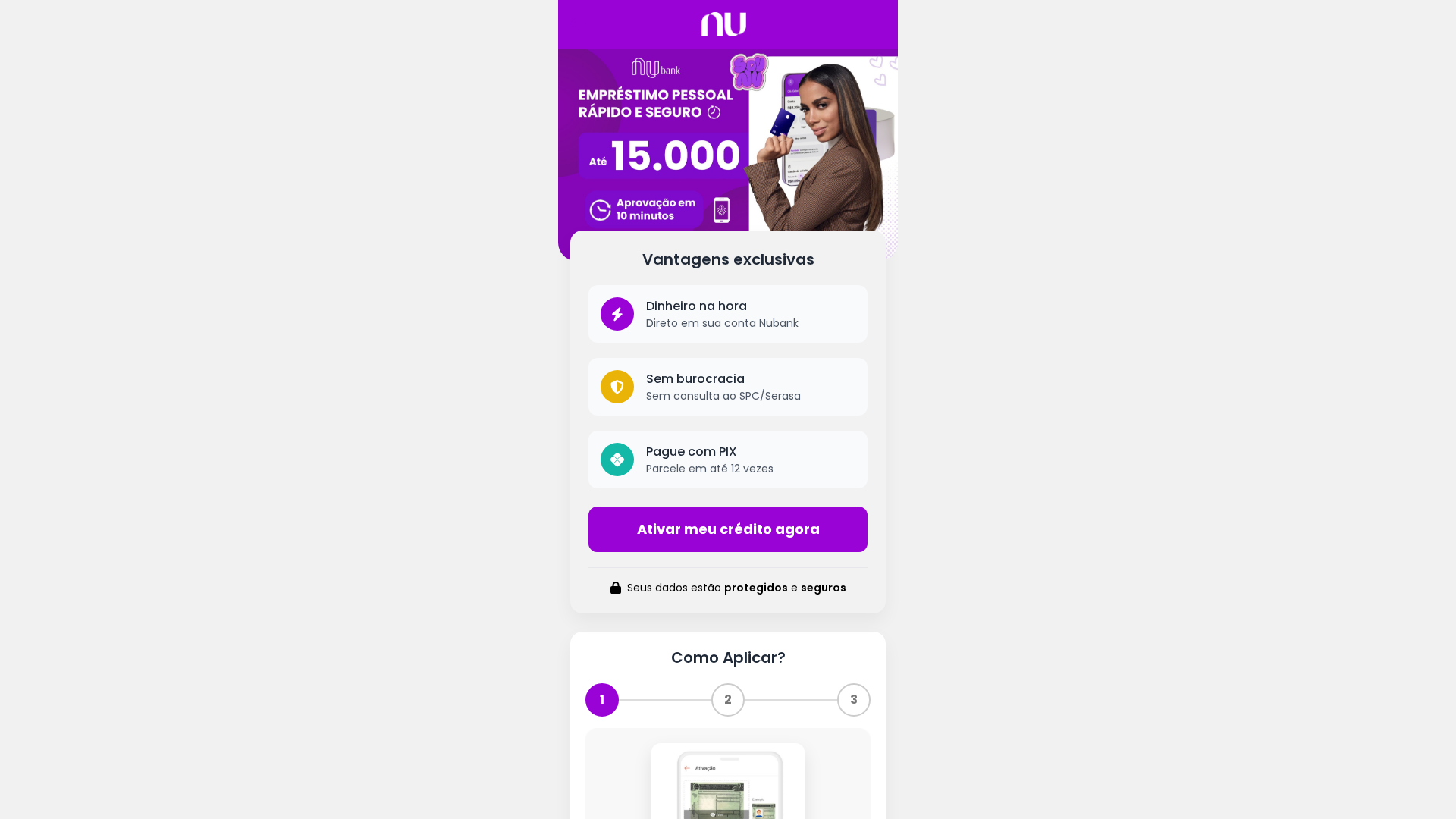
Nubank
https://emprestimo-nu.com/inicio/01/
Feb 18, 2026
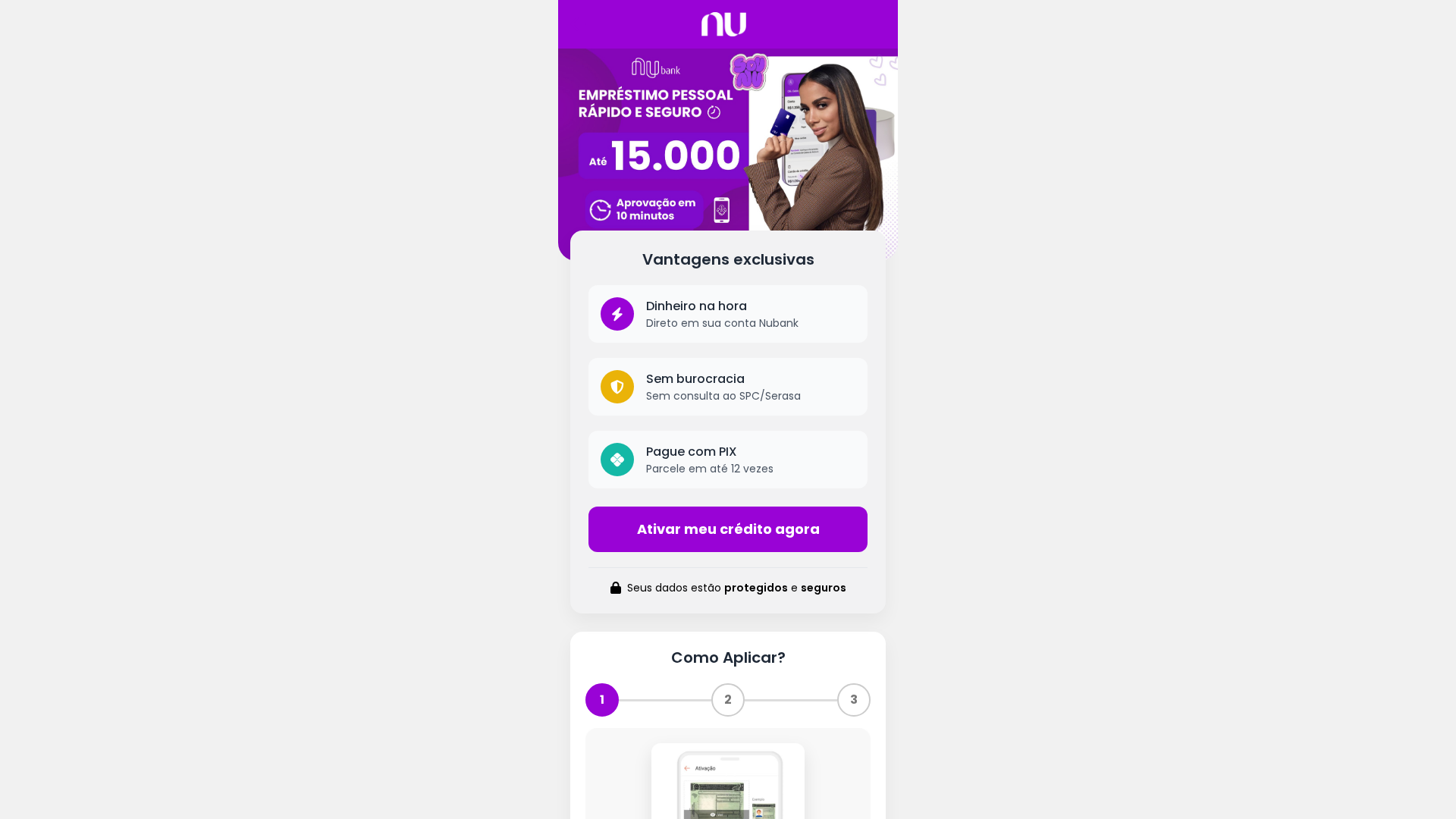
Nubank
https://emprestimoliberado.com/inicio/01/
Feb 13, 2026
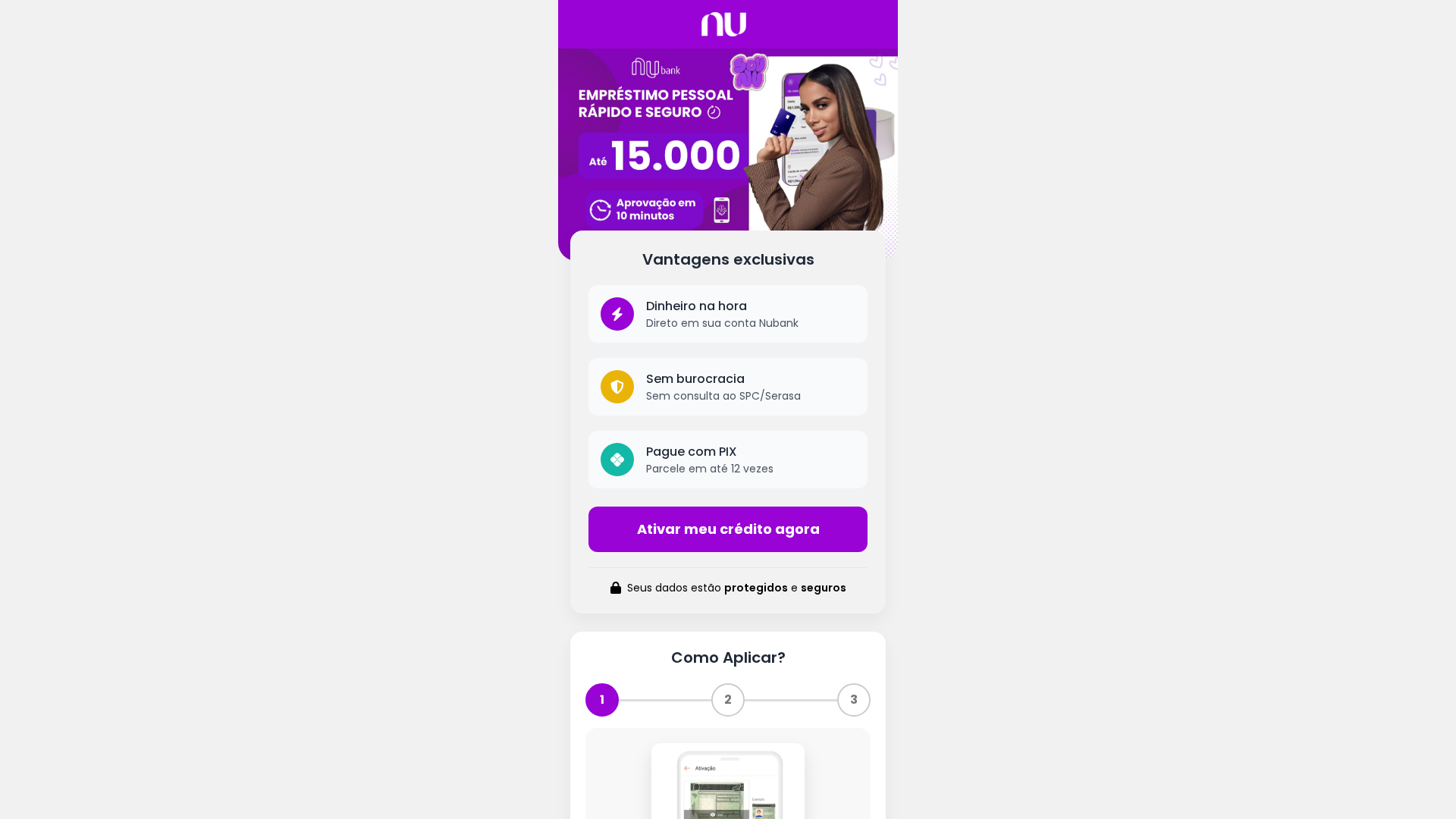
Nubank
https://nuudin.site/1/
Feb 12, 2026
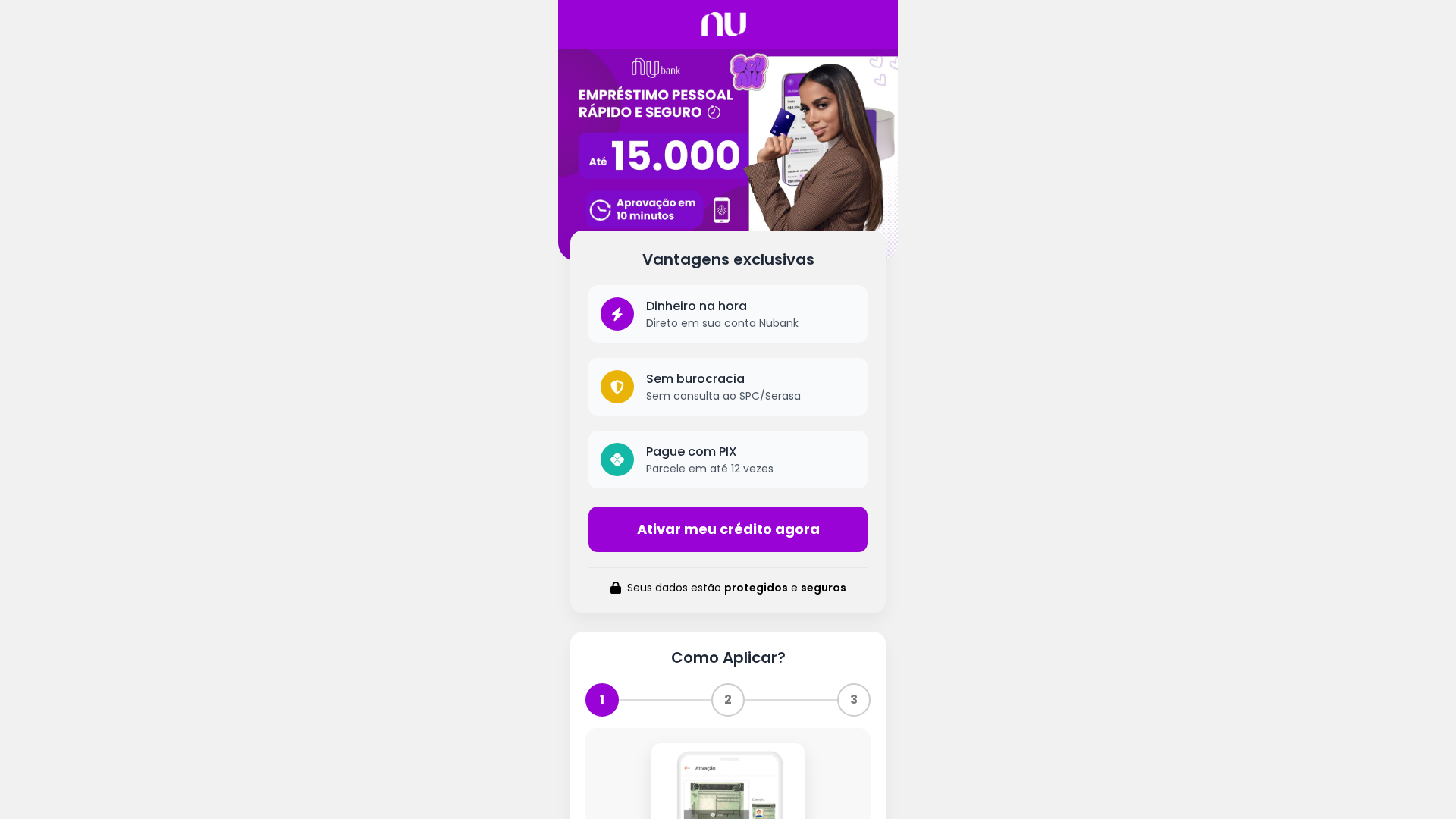
NuBank
https://seguniao.pro/inicio/01/?utm_source=google&utm_ca...
Feb 12, 2026
Scan History for emprestimoliberado.com
Found 1 other scan for this domain

"I Never Thought It Would Happen to Me"
That's what 2.3 million victims say every year. Don't wait to become a statistic.