
Phishing Analysis
Detailed analysis of captured phishing page
Visual Capture
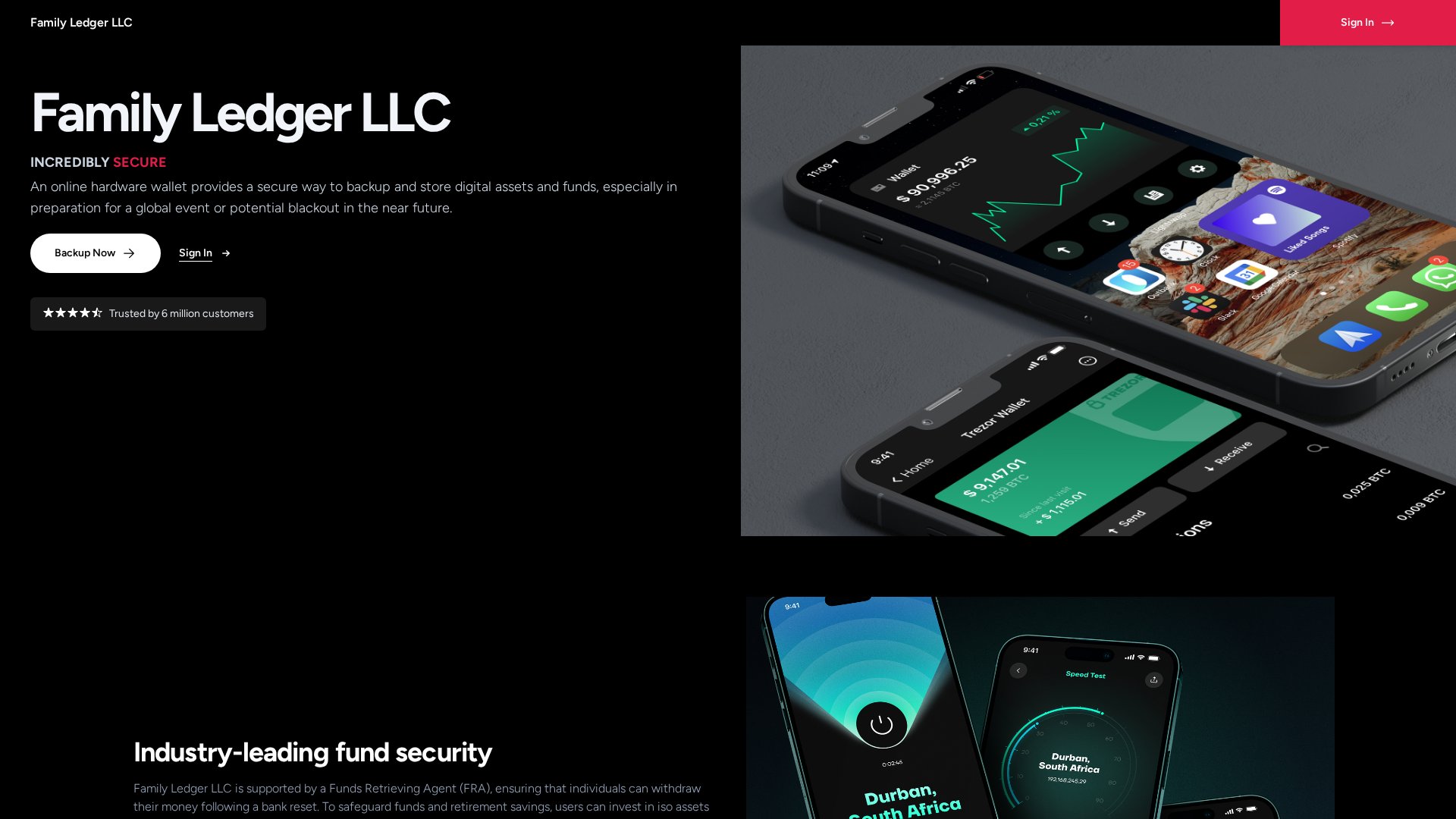
Detection Info
https://familyledger-llc.com/
Detected Brand
Trezor
Country
International
Confidence
95%
HTTP Status
200
Report ID
1b867c50-0d4…
Analyzed
2026-07-05 23:23
Content Hashes (HTML Similarity)
Used to detect similar phishing pages based on HTML content
| Algorithm | Hash Value |
|---|---|
|
CONTENT
TLSH
|
T12E82C6B0201856BF248B87B5FB307B25B27994CEE17FC195E3E8C692AF91CA6CD51350 |
|
CONTENT
ssdeep
|
192:j6b826ty3aBj451515151iHjAkeOFNQWjofVvmlHbV7/0a6bYrM8H9VOW8:R26aaBOLLL4Hjve01iM7YSMY38 |
Visual Hashes (Screenshot Similarity)
Used to detect visually similar phishing pages based on screenshots
| Algorithm | Hash Value |
|---|---|
|
VISUAL
pHash
|
b9a96152821b6ebe |
|
VISUAL
aHash
|
0fcb8f0f0e000c46 |
|
VISUAL
dHash
|
1b9b3a1b5c18da9c |
|
VISUAL
wHash
|
0fcf8f0f0f0c0c6e |
|
VISUAL
colorHash
|
39208000240 |
|
VISUAL
cropResistant
|
1b9b3a1b5c18da9c |
Code Analysis
Risk Score
50/100
Threat Level
ALTO
⚠️ Phishing Confirmed
🎣 Credential Harvester
🔬 Threat Analysis Report
• Threat: Cryptocurrency Phishing / Asset Theft
• Target: Trezor users
• Method: Impersonation of hardware wallet services with 'recovery' or 'backup' lures
• Exfil: User credentials or recovery seed phrases
• Indicators: Use of stolen Trezor UI imagery and 'bank reset' conspiracy narratives
• Risk: Critical
🎯 Kit Endpoints
- login
📡 API Calls Detected
- GET
📊 Risk Score Breakdown
Total Risk Score
95/100
Contributing Factors
Brand Impersonation
Direct visual theft of Trezor UI
Deceptive Content
Scam 'Funds Retrieving Agent' narrative
🔬 Comprehensive Threat Analysis
Threat Type
Credential Harvesting Kit
Target
Trezor users (International)
Attack Method
Brand impersonation + credential harvesting forms
Exfiltration Channel
Form submission (backend endpoint not detected - likely JavaScript-based)
Risk Assessment
MEDIUM - Automated credential harvesting with Form submission (backend endpoint not detected - likely JavaScript-based)
⚠️ Indicators of Compromise
- Kit types: Credential Harvester
🏢 Brand Impersonation Analysis
Impersonated Brand
Trezor
Official Website
https://trezor.io
Fake Service
Digital Asset Backup
Fraudulent Claims
⚔️ Attack Methodology
Primary Method: Credential Harvesting
The site lures users to input seed phrases or credentials under the guise of an account backup or recovery operation.
Secondary Method: Brand Impersonation
Using legitimate-looking UI screenshots to bypass user suspicion.
🌐 Infrastructure Indicators of Compromise
Domain Information
Domain
familyledger-llc.com
Registered
2026-01-28
Registrar
Unknown
Status
Active
🤖 AI-Extracted Threat Intelligence

"I Never Thought It Would Happen to Me"
That's what 2.3 million victims say every year. Don't wait to become a statistic.