
Phishing Analysis
Detailed analysis of captured phishing page
Visual Capture
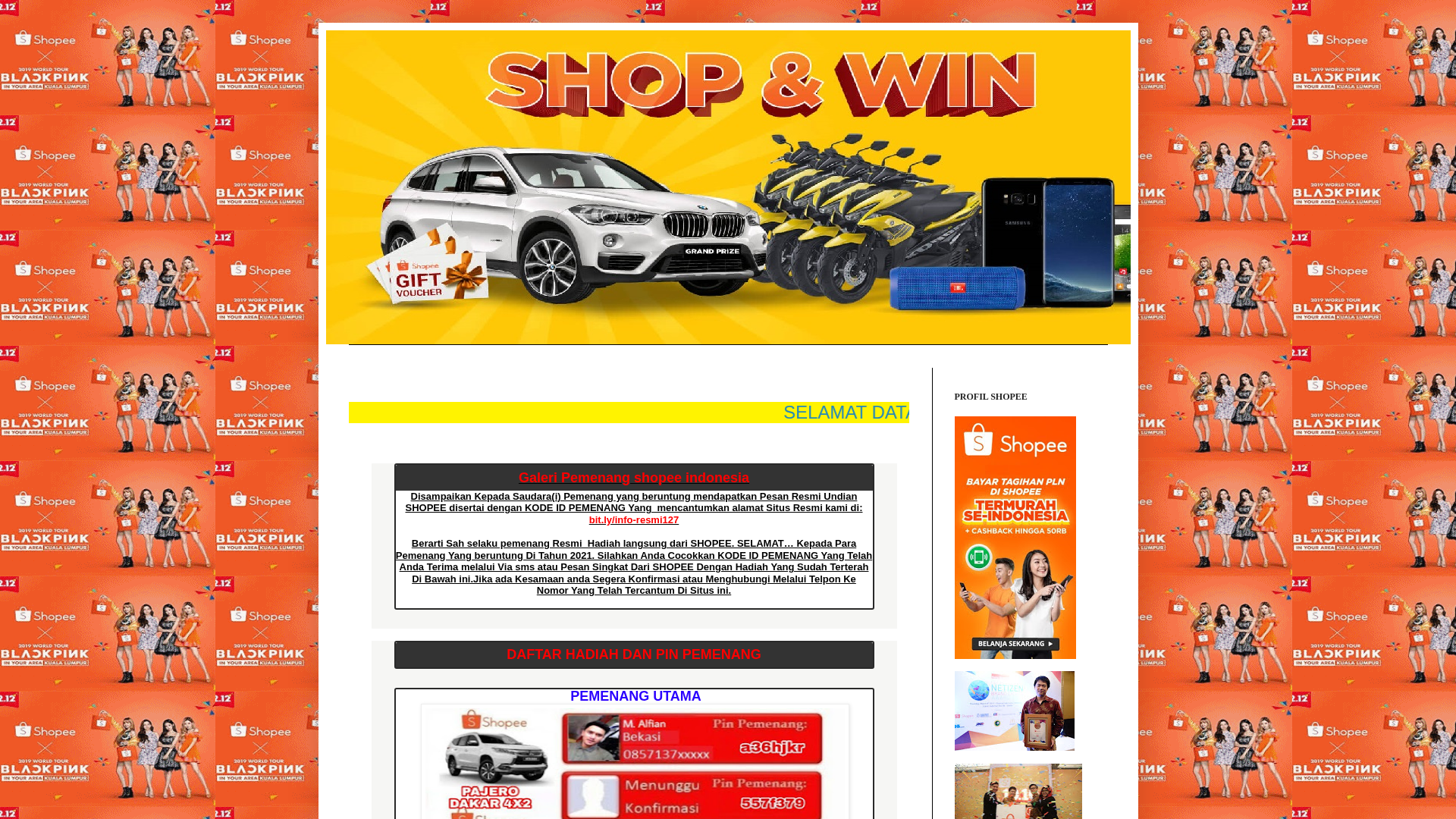
Detection Info
https://info-resmi127.blogspot.com/?m=1
Detected Brand
Shopee
Country
Unknown
Confidence
100%
HTTP Status
200
Report ID
46be8f66-b77…
Analyzed
2026-05-31 10:10
Content Hashes (HTML Similarity)
Used to detect similar phishing pages based on HTML content
| Algorithm | Hash Value |
|---|---|
|
CONTENT
TLSH
|
T1FC83EE72A23B1826901FB1E4A2A447193683DB8AC7478BF6927C52F67BCDC753D1318D |
|
CONTENT
ssdeep
|
1536:bYDudsunf3AMOxb9y+M8EjOe6feCpey9M6GFVeEK3kMfzSATMJMgMiTiv6ie8/AY:bYDudsun1OUr63ZfwW98KpTwlvwIVmGQ |
Visual Hashes (Screenshot Similarity)
Used to detect visually similar phishing pages based on screenshots
| Algorithm | Hash Value |
|---|---|
|
VISUAL
pHash
|
c36c339c929e6969 |
|
VISUAL
aHash
|
2c30203c7c7c7c6c |
|
VISUAL
dHash
|
d4d4c2d0c8d8c8c8 |
|
VISUAL
wHash
|
2830203c7e7e7e6e |
|
VISUAL
colorHash
|
02200030000 |
|
VISUAL
cropResistant
|
d4d4c2d0c8d8c8c8,eee5490981915971,0000486969969640,0024486868e80200,4cce81ca66667633,315e4e4c2c8c4c31 |
Code Analysis
Risk Score
82/100
Threat Level
ALTO
⚠️ Phishing Confirmed
🎣 Credential Harvester
🎣 OTP Stealer
🎣 Banking
🎣 Personal Info
🔒 Obfuscation Detected
- eval
- fromCharCode
- hex_escape
- unicode_escape
🎯 Kit Endpoints
- https://info-resmi127.blogspot.com/
- https://www.blogger.com/feeds/1851978028113457640/posts/default
- https://www.blogger.com/blog/post/edit/4234534092398195229/6521295612859932174#
- https://info-resmi127.blogspot.com/feeds/posts/default
- https://www.blogger.com/blog/post/edit/262773320390916029/3219240425370124587#
- https://www.blogger.com
- https://info-resmi127.blogspot.com/2021/01/selamat-datang-kepada-pemenang-shopee.html
- https://info-resmi127.blogspot.com/feeds/posts/default?alt=rss
- https://www.blogger.com/blog/post/edit/262773320390916029/1861791205638106310#
- https://www.blogger.com/profile/08942673157207246252
- https://api.whatsapp.com/send?phone=6287880112547&text=Silakan%20konfirmasikan%0ANama%20lengkap%20%20%3B%0APin%20pemenang%20%20%3B%0ANomor%2Fhp.%20%20%20%20%20%20%20%20%3B
- https://www.blogger.com/dyn-css/authorization.css?targetBlogID=1851978028113457640&zx=2d61c0da-8f84-4006-967c-a662284a5938
📡 API Calls Detected
- post
📊 Risk Score Breakdown
Total Risk Score
100/100
Contributing Factors
Active Phishing Kit
Detected kit types: Credential Harvester, OTP Stealer, Banking, Personal Info
Code Obfuscation
JavaScript code obfuscated using 20 technique(s) to evade detection
🔬 Comprehensive Threat Analysis
Threat Type
Banking Credential Harvester
Target
Shopee users
Attack Method
obfuscated JavaScript
Exfiltration Channel
Form submission (backend endpoint not detected - likely JavaScript-based)
Risk Assessment
CRITICAL - Automated credential harvesting with Form submission (backend endpoint not detected - likely JavaScript-based)
⚠️ Indicators of Compromise
- Kit types: Credential Harvester, OTP Stealer, Banking, Personal Info
- 20 obfuscation techniques
🏢 Brand Impersonation Analysis
Impersonated Brand
Shopee
Official Website
N/A
Fake Service
Banking/payment service
⚔️ Attack Methodology
Primary Method: Credential Harvesting
Victim enters username and password into fake login form. Credentials are captured via JavaScript and exfiltrated to attacker's server in real-time.
Secondary Method: JavaScript Obfuscation
Malicious code is obfuscated using 20 techniques to evade detection by security scanners and make reverse engineering more difficult.
🌐 Infrastructure Indicators of Compromise
Domain Information
Domain
info-resmi127.blogspot.com
Registered
Unknown
Registrar
None
Status
Age unknown
Hosting Information
Provider
Unknown
ASN
🤖 AI-Extracted Threat Intelligence

"I Never Thought It Would Happen to Me"
That's what 2.3 million victims say every year. Don't wait to become a statistic.