
Phishing Analysis
Detailed analysis of captured phishing page
Visual Capture
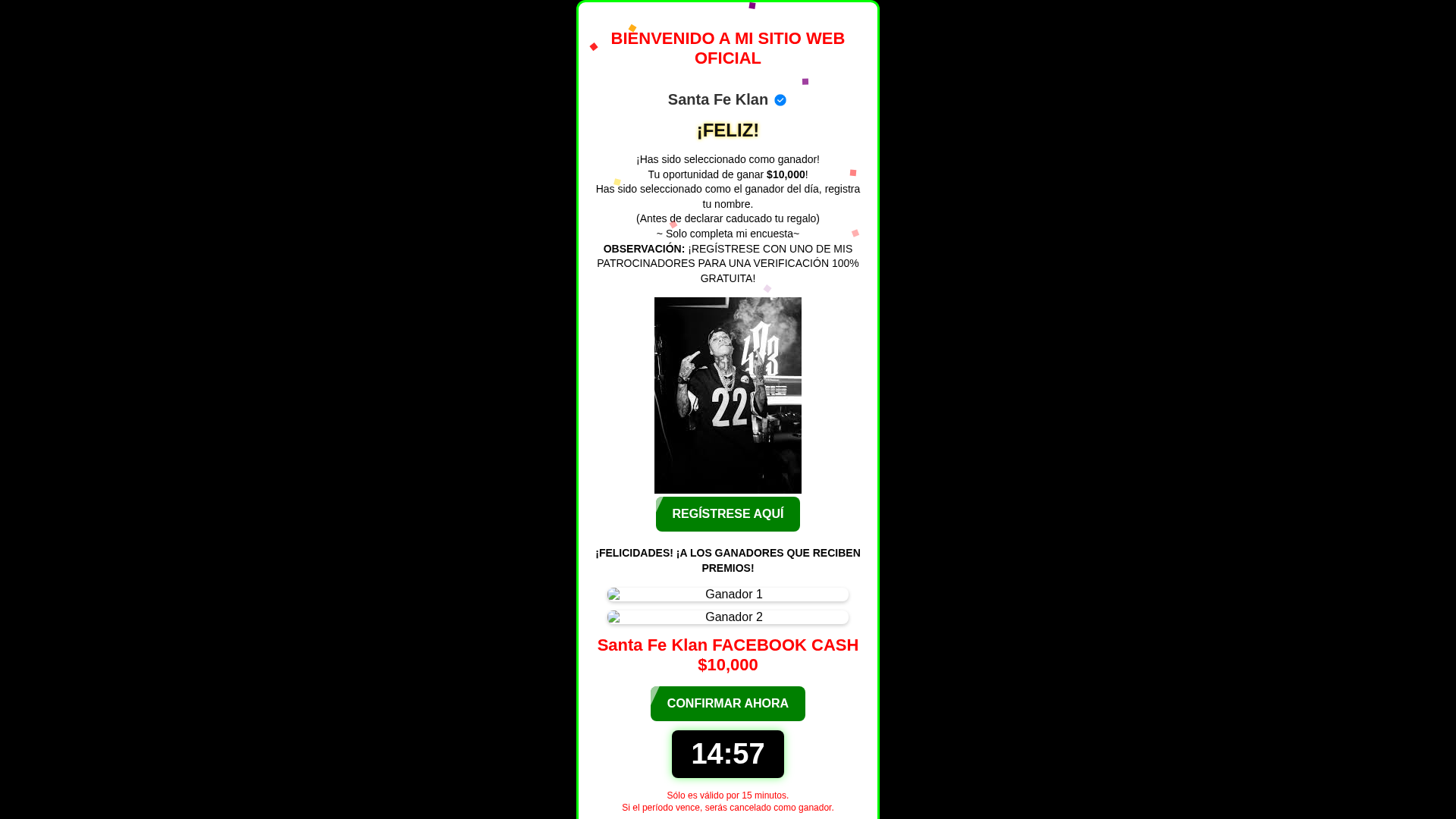
Detection Info
https://santafkln2026.blogspot.com/
Detected Brand
Santa Fe Klan
Country
Unknown
Confidence
100%
HTTP Status
200
Report ID
9da19b7c-330…
Analyzed
2026-08-31 00:20
Content Hashes (HTML Similarity)
Used to detect similar phishing pages based on HTML content
| Algorithm | Hash Value |
|---|---|
|
CONTENT
TLSH
|
T174C1E97399D69C077E36C19EADD1F31999B292C4CA0A8CCCA1DC52AE36C8DE141D3272 |
|
CONTENT
ssdeep
|
96:T//yymfj9TJqaaSS2VLttYgPCYjlwhrjZcC:TyVrp6YalB |
Visual Hashes (Screenshot Similarity)
Used to detect visually similar phishing pages based on screenshots
| Algorithm | Hash Value |
|---|---|
|
VISUAL
pHash
|
9999cccc3399cc66 |
|
VISUAL
aHash
|
1818181818181818 |
|
VISUAL
dHash
|
b2b2b2b2b2b2b2b2 |
|
VISUAL
wHash
|
3c3c3c3c3c3c3c3c |
|
VISUAL
colorHash
|
31000008e00 |
|
VISUAL
cropResistant
|
0d0f1b9e960f0f96,0505050505050505,4040404040404040,fc7cb4b2740173d4 |
Code Analysis
Risk Score
79/100
Threat Level
ALTO
⚠️ Phishing Confirmed
🎣 Credential Harvester
🎣 OTP Stealer
🎣 Personal Info
🔒 Obfuscation Detected
- eval
- fromCharCode
- unescape
🎯 Kit Endpoints
- https://www.blogger.com/profile/14716805668022371394
- https://www.blogger.com/profile/09050259533246569124
- https://www.blogger.com/profile/01867002434725232867
- https://www.blogger.com/profile/01047181202349429649
- https://www.blogger.com/profile/10191103854914551852
- https://www.blogger.com/profile/02247381917657198684
- https://draft.blogger.com/profile/01047181202349429649
- https://www.blogger.com/profile/02271343762134763519
- https://www.blogger.com/profile/01311608883639924370
- https://www.blogger.com/navbar/7897389714550663065?origin=https://njr10mar.blogspot.com&usegapi=1&jsh=m%3B%2F_%2Fscs%2Fabc-static%2F_%2Fjs%2Fk%3Dgapi.lb.en.zhTT8Br0Ho8.O%2Fd%3D1%2Frs%3DAHpOoo-7LeULGjNQZRvhdu3G71akb6JY6A%2Fm%3D__features__#id=navbar-iframe&_gfid=navbar-iframe&parent=https%3A%2F%2Fsantafkln2026.blogspot.com&pfname=&rpctoken=93879277
- https://www.blogger.com/profile/07867882971871789366
- https://www.blogger.com/profile/16734011564954143732
📊 Risk Score Breakdown
Total Risk Score
100/100
Contributing Factors
Active Phishing Kit
Detected kit types: Credential Harvester, OTP Stealer, Personal Info
Code Obfuscation
JavaScript code obfuscated using 11 technique(s) to evade detection
🔬 Comprehensive Threat Analysis
Threat Type
Two-Factor Authentication Stealer
Target
Santa Fe Klan users
Attack Method
obfuscated JavaScript
Exfiltration Channel
Form submission (backend endpoint not detected - likely JavaScript-based)
Risk Assessment
HIGH - Automated credential harvesting with Form submission (backend endpoint not detected - likely JavaScript-based)
⚠️ Indicators of Compromise
- Kit types: Credential Harvester, OTP Stealer, Personal Info
- 11 obfuscation techniques
🏢 Brand Impersonation Analysis
Impersonated Brand
Santa Fe Klan
Official Website
N/A
Fake Service
Credential harvesting service
⚔️ Attack Methodology
Primary Method: Credential Harvesting
Victim enters username and password into fake login form. Credentials are captured via JavaScript and exfiltrated to attacker's server in real-time.
Secondary Method: JavaScript Obfuscation
Malicious code is obfuscated using 11 techniques to evade detection by security scanners and make reverse engineering more difficult.
🌐 Infrastructure Indicators of Compromise
Domain Information
Domain
santafkln2026.blogspot.com
Registered
Unknown
Registrar
None
Status
Age unknown
Hosting Information
Provider
Unknown
ASN
🤖 AI-Extracted Threat Intelligence

"I Never Thought It Would Happen to Me"
That's what 2.3 million victims say every year. Don't wait to become a statistic.