
Phishing Analysis
Detailed analysis of captured phishing page
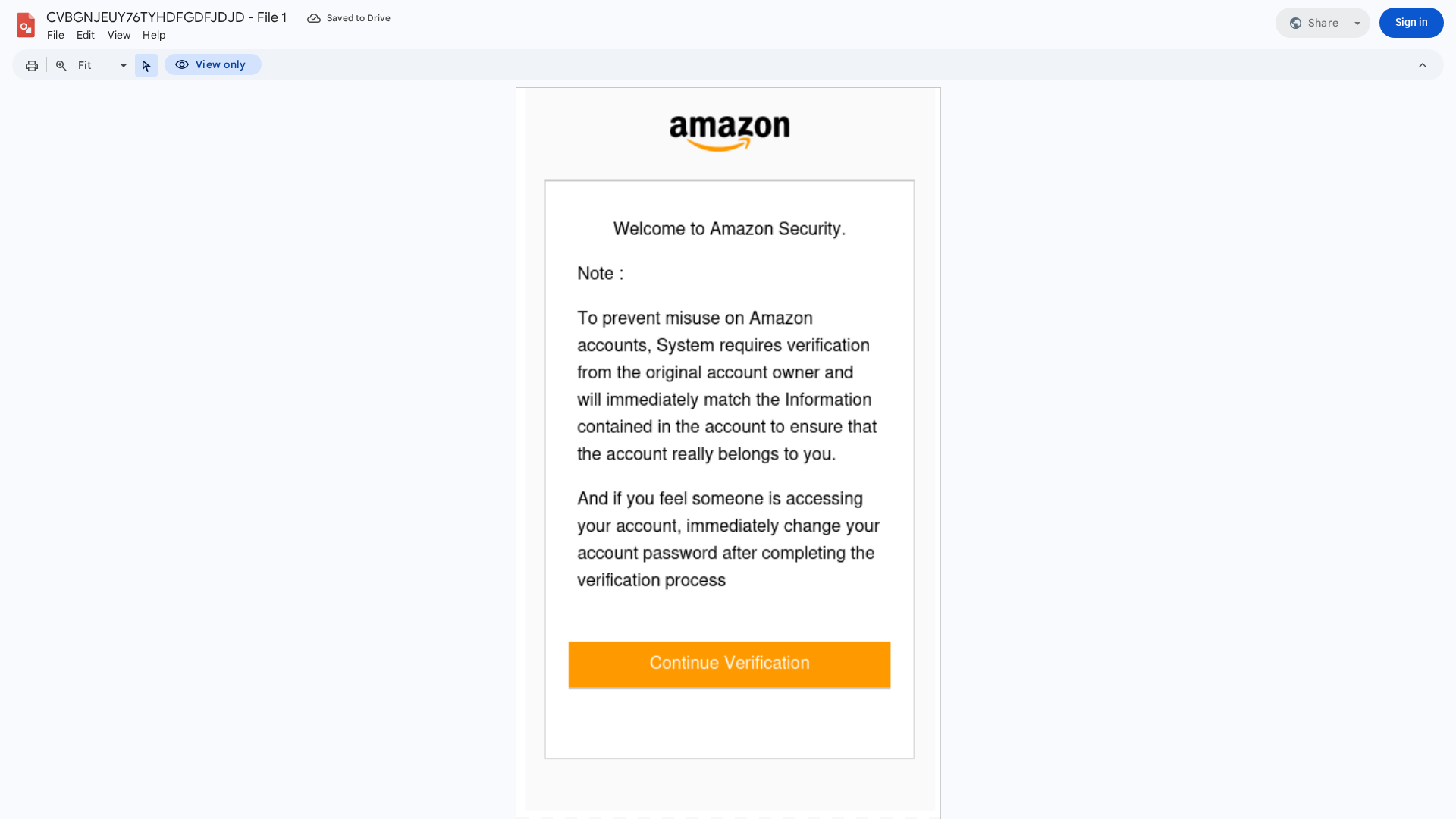
Visual Capture
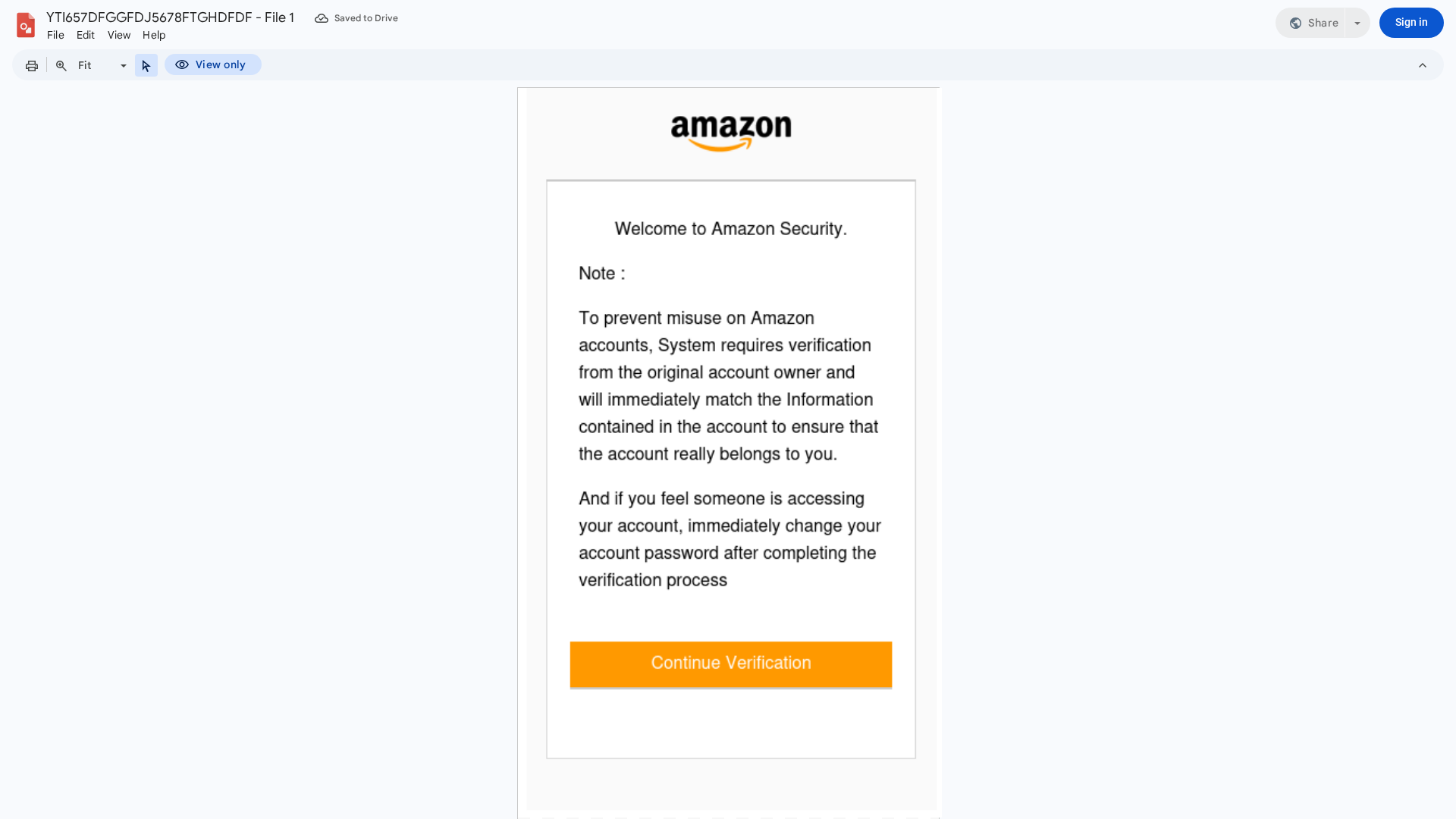
Detection Info
Content Hashes (HTML Similarity)
Used to detect similar phishing pages based on HTML content
| Algorithm | Hash Value |
|---|---|
|
CONTENT
TLSH
|
T185131233C0132132525B52E5F8A0775A2293C32EDE4708491B7CDB913BFBDAA798795D |
|
CONTENT
ssdeep
|
768:BYRe/CtiGL13/hRJ6a+co6v+c6o4IE/Irb5dEoGEqOzVWsPk6TRC1mX6nw3GT8v:KReatpL13/fJ6fco6Gc6o4L/Irb5dEoR |
Visual Hashes (Screenshot Similarity)
Used to detect visually similar phishing pages based on screenshots
| Algorithm | Hash Value |
|---|---|
|
VISUAL
pHash
|
b3154d151555dd55 |
|
VISUAL
aHash
|
26e7ffe7e7e7e7ff |
|
VISUAL
dHash
|
cc0d484c4c4c4c20 |
|
VISUAL
wHash
|
00c4c4c4c7c7c7ff |
|
VISUAL
colorHash
|
07000030000 |
|
VISUAL
cropResistant
|
cc0d484c4c4c4c20 |
Code Analysis
🔬 Threat Analysis Report
• Threat: Phishing
• Target: Amazon Users
• Method: Impersonation via email and fake verification request
• Exfil: Unknown, likely password or account details through a fake login page (not visible in the screenshot).
• Indicators: Mismatched domain, brand logo, calls to action to 'verify'
• Risk: High
🔒 Obfuscation Detected
- atob
- eval
- fromCharCode
- unescape
- document.write
- hex_escape
- unicode_escape
- base64_strings
📡 API Calls Detected
- POST
- GoogleDocs
- footer
- ol
- kbd
- p
- hr
- td
- a
- /videos/u/0/debug/fetchmediafromfilestorage?mediaId=
- h2
📊 Risk Score Breakdown
Contributing Factors
🔬 Comprehensive Threat Analysis
⚠️ Indicators of Compromise
- Kit types: Credential Harvester, OTP Stealer, Card Stealer, Banking, Personal Info
- 931 obfuscation techniques
🏢 Brand Impersonation Analysis
Fraudulent Claims
⚔️ Attack Methodology
Primary Method: Credential Harvesting (Phishing)
The attacker sends a fake email to Amazon customers, using the Amazon brand and logo. The email includes text designed to induce a sense of urgency. The email directs the user to click a 'Continue Verification' button that will take them to a fake login page that harvests the user's account credentials.
Secondary Method: Social Engineering
The attacker uses social engineering tactics like fear and urgency to trick the user into clicking a link and providing their login details.
🌐 Infrastructure Indicators of Compromise
Domain Information
🤖 AI-Extracted Threat Intelligence
Similar Websites
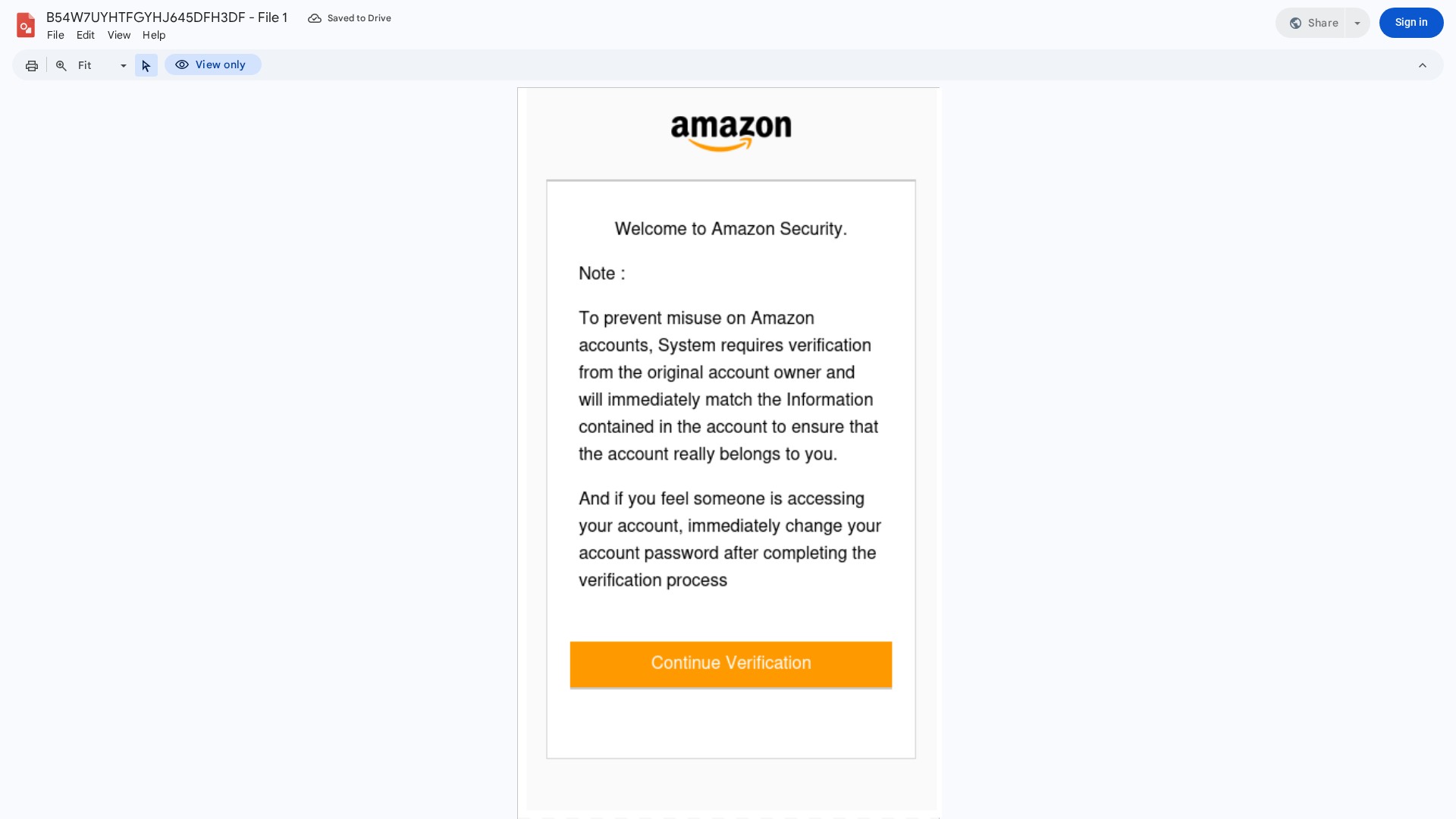
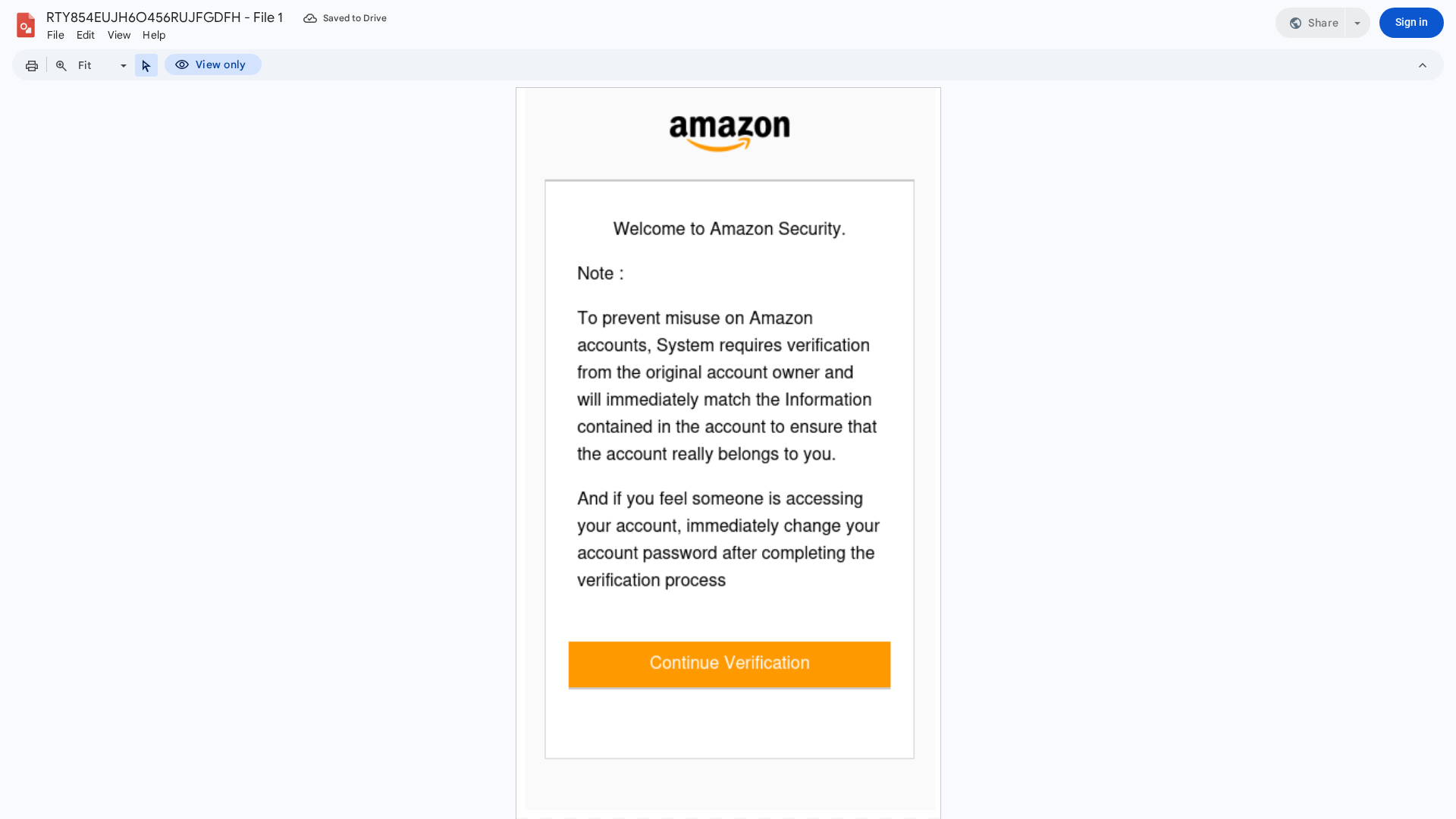
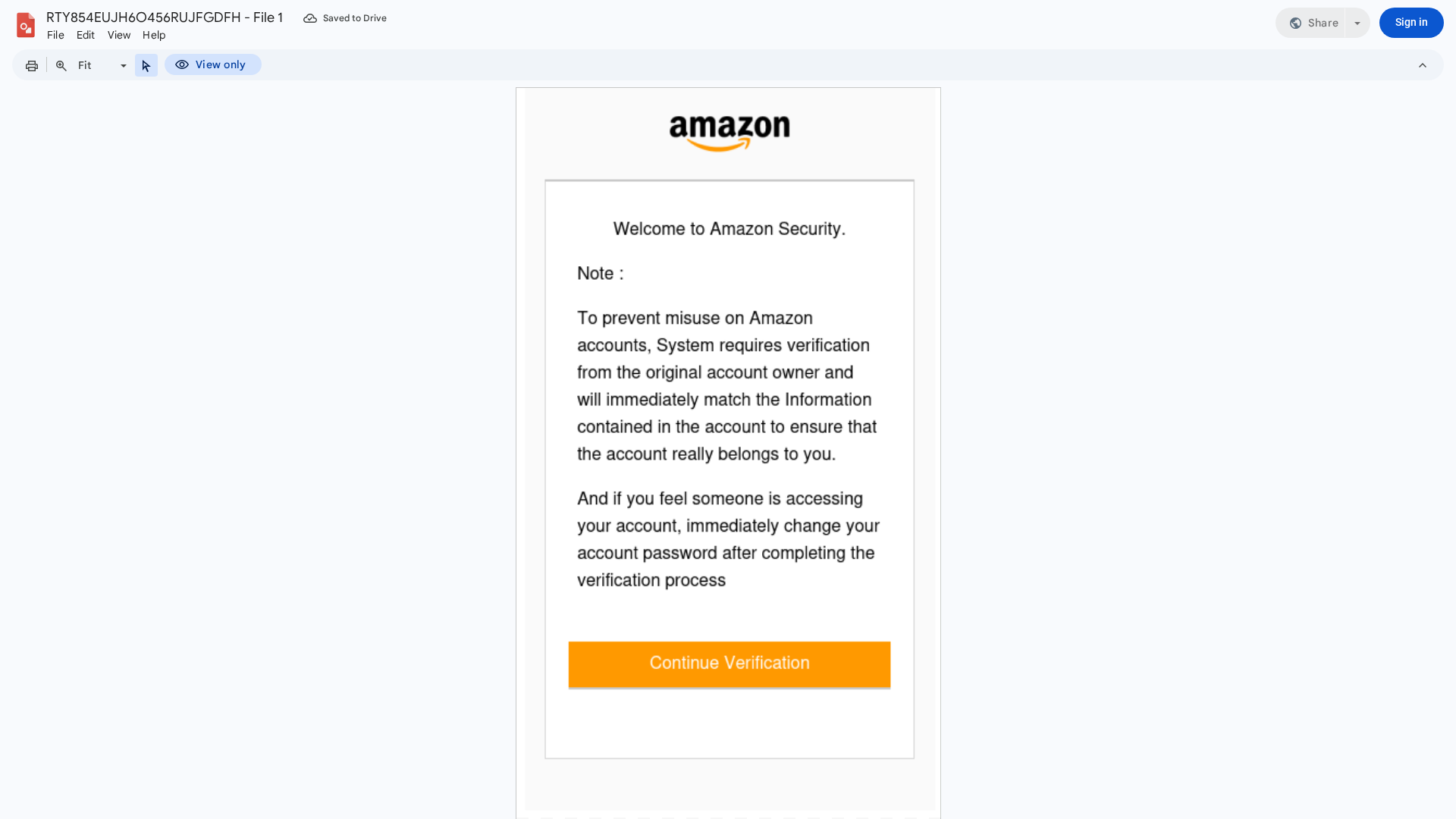
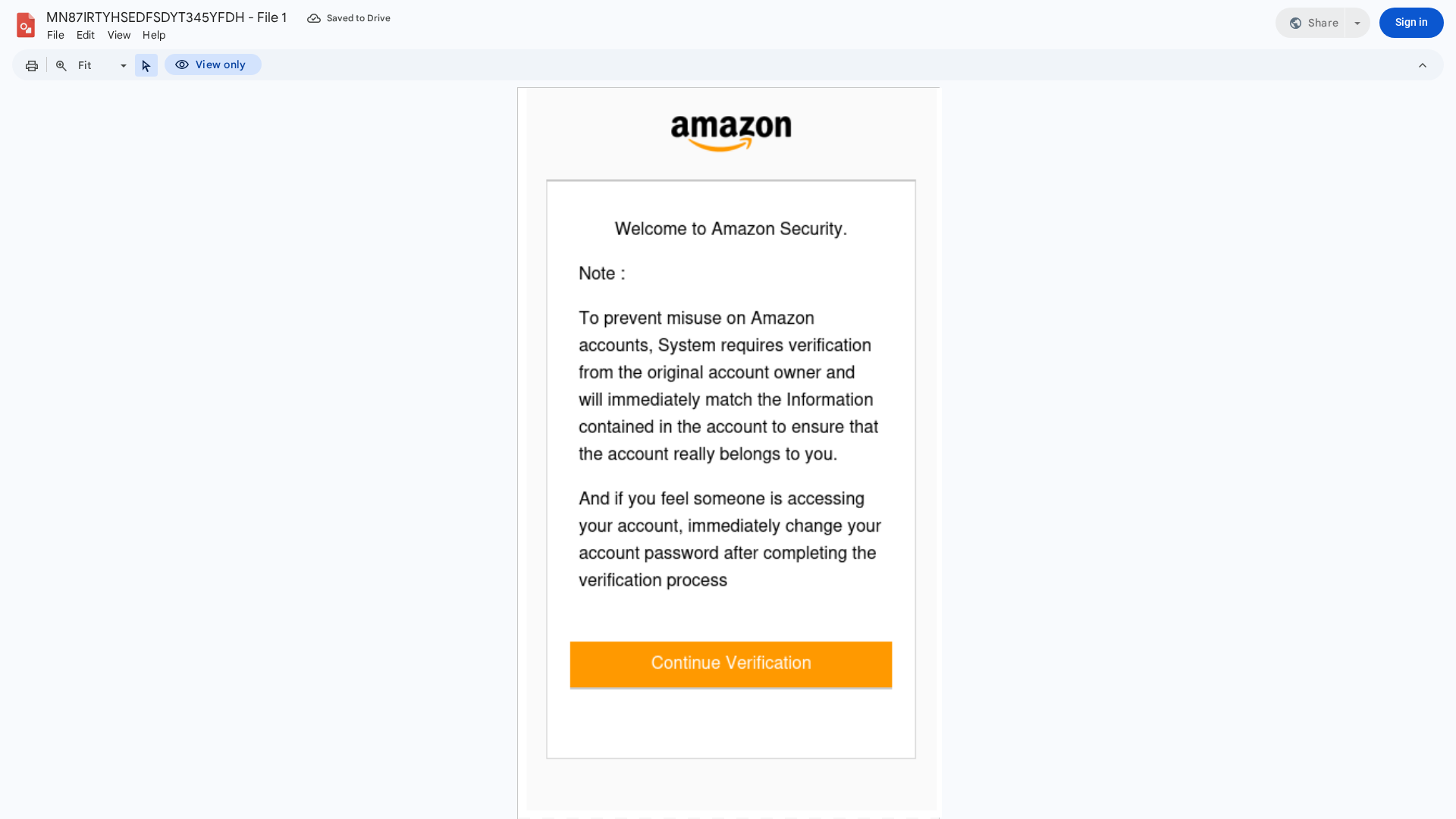
Pages with identical visual appearance (based on perceptual hash)
Scan History for docs.google.com
Found 10 other scans for this domain
-
https://docs.google.com/drawings/d/1sj4whBVnBiYbBM...
https://docs.google.com/drawings/d/1yLlUaHnTsx9QSl...
https://docs.google.com/drawings/d/1HkX3Q8Vmr0bSej...
https://docs.google.com/drawings/d/1RCgegAUJGIZOBP...
https://docs.google.com/drawings/d/18Q2Qo6ik56ER5d...
https://docs.google.com/drawings/d/1LyvbqGTLtDzf81...
https://docs.google.com/drawings/d/1QKtwKh3JuUaEHs...
https://docs.google.com/drawings/d/1fL_fne4OgKiCLk...
https://docs.google.com/drawings/d/16f_LOTLDkqMT1D...
https://docs.google.com/drawings/d/11hOe-NpeBFsnAL...
