Phishing Analysis
Detailed analysis of captured phishing page
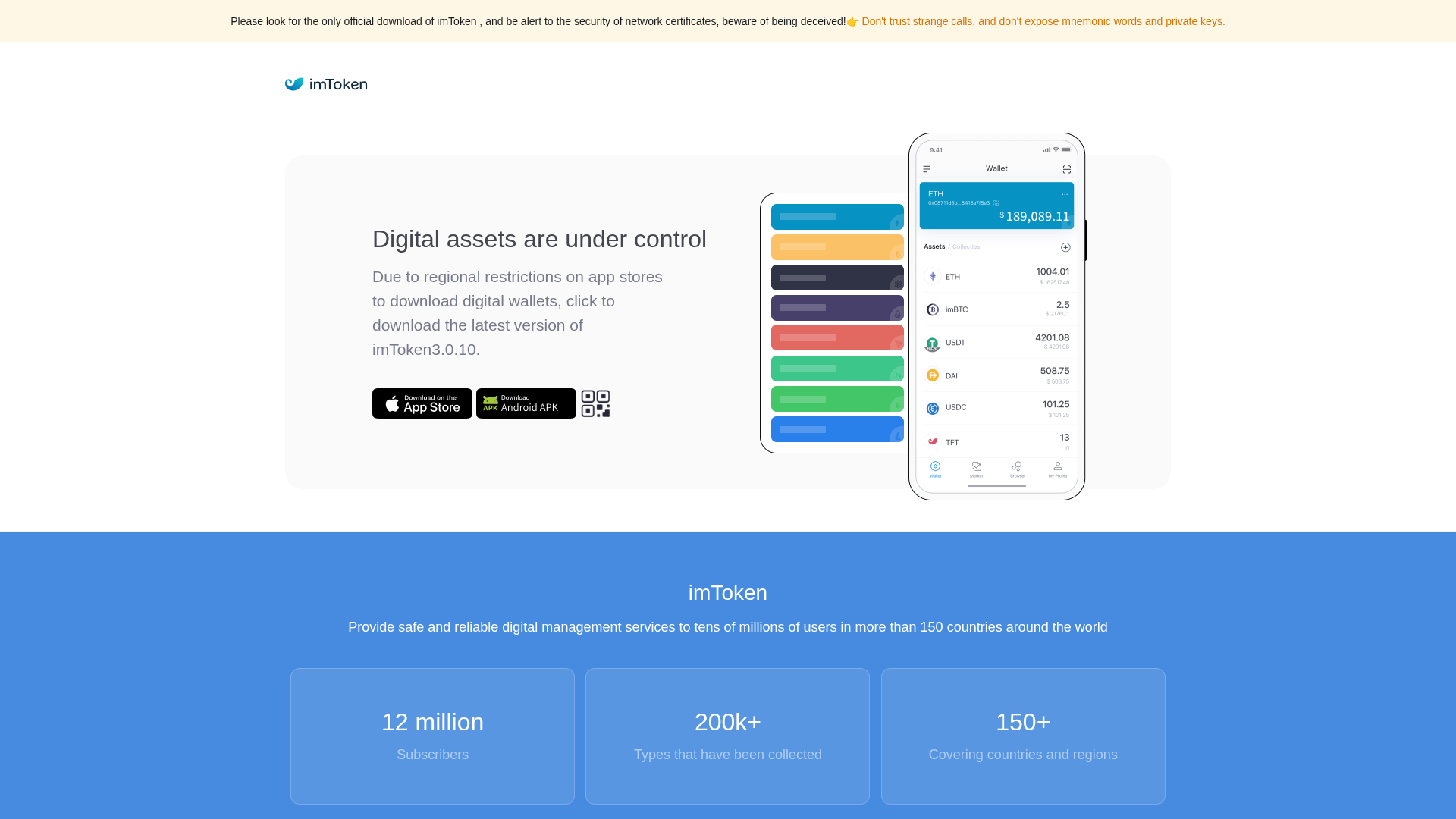
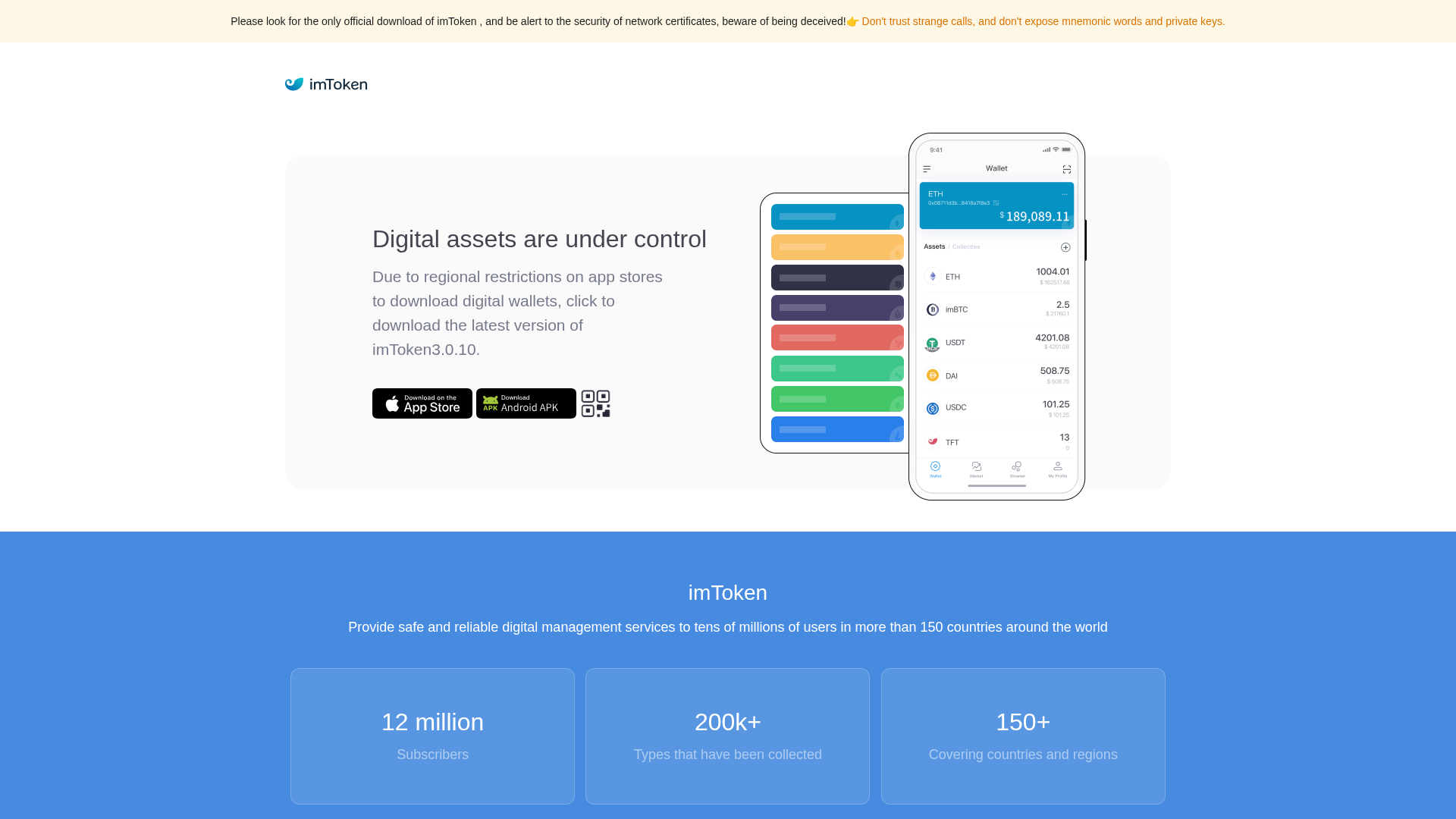
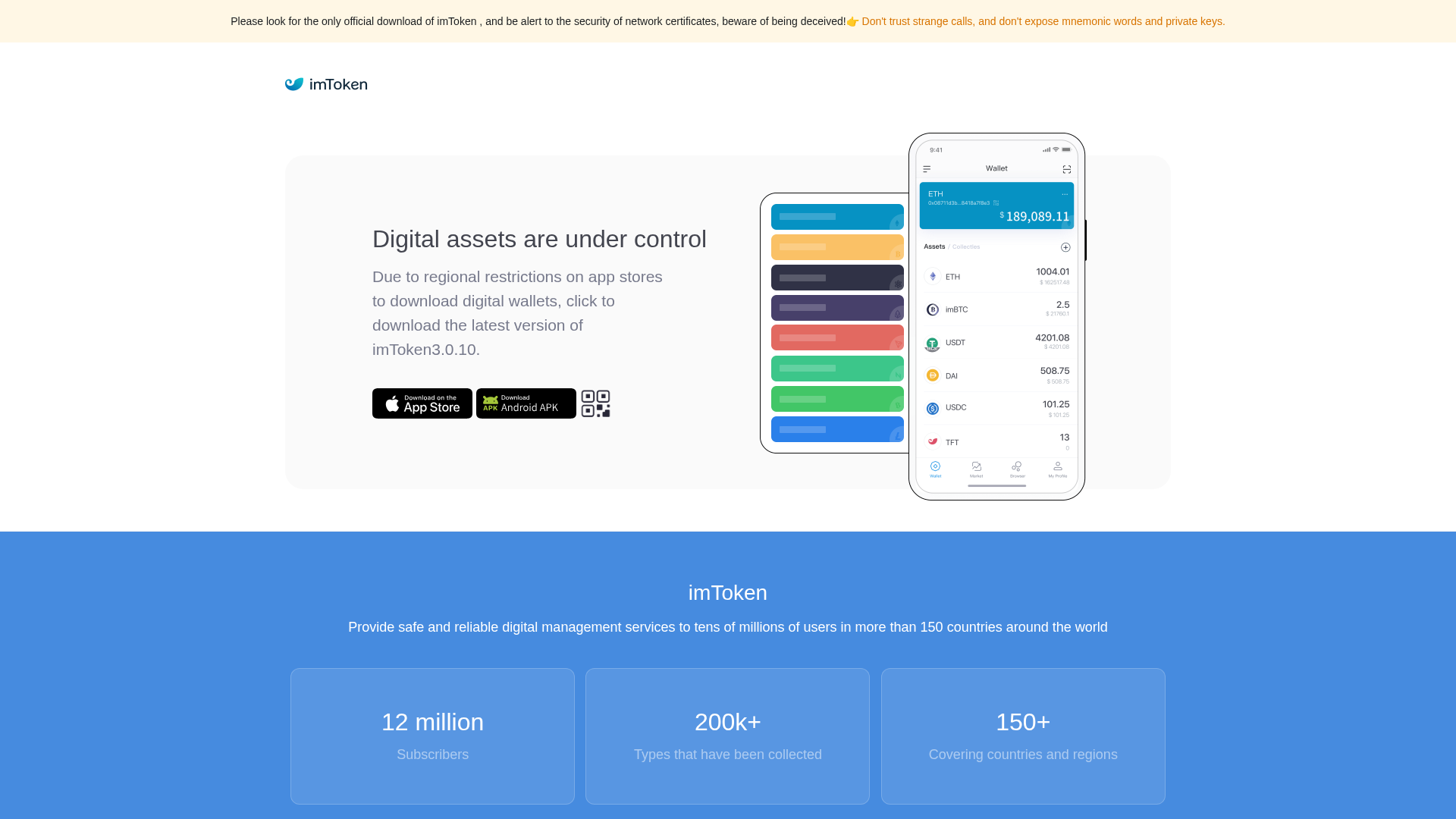
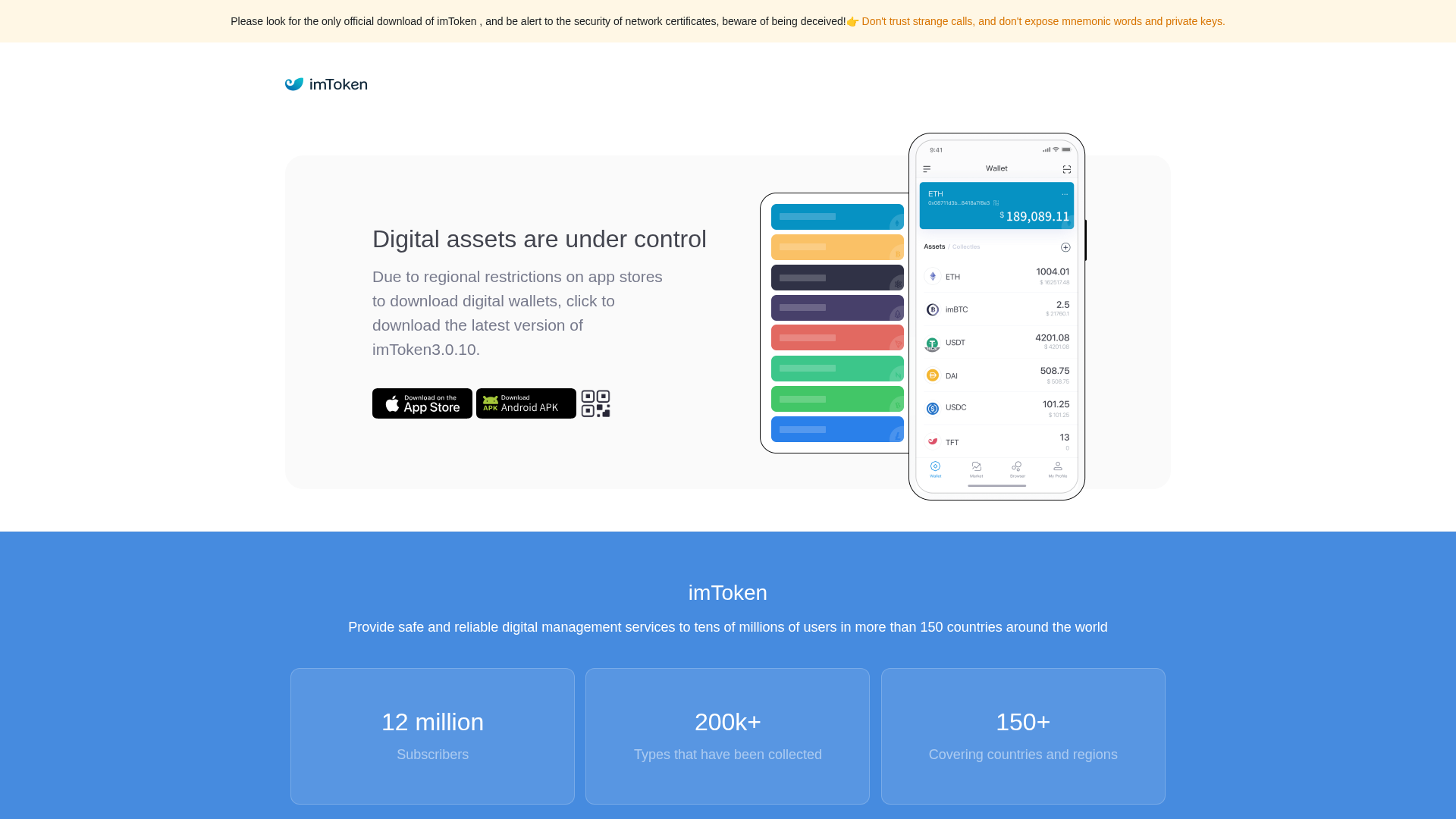
Visual Capture
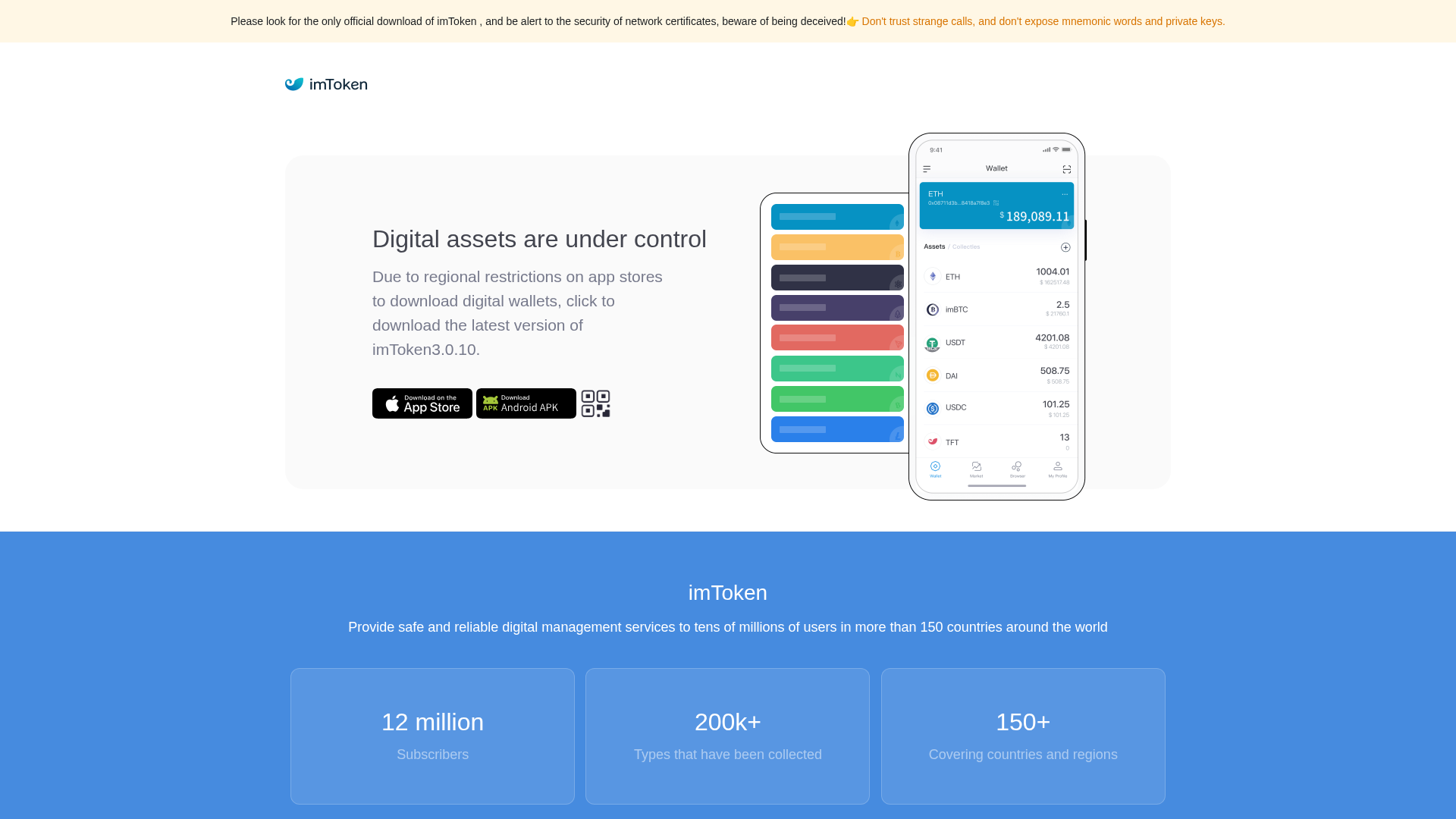
Detection Info
Content Hashes (HTML Similarity)
Used to detect similar phishing pages based on HTML content
| Algorithm | Hash Value |
|---|---|
|
CONTENT
TLSH
|
T1FAC163359461AE37548791D5EBF2A31FA6A18349C3271E0563F483AEAFC6F59CC13086 |
|
CONTENT
ssdeep
|
48:xNpQbqwBOjzTCsRHgWTiS04YsN1i204mNCRfFQmc7IKfi60CbOz+wt89V3Lz74p+:xs89HdTiSD3N1i2Dt5c+wxfpHjz9 |
Visual Hashes (Screenshot Similarity)
Used to detect visually similar phishing pages based on screenshots
| Algorithm | Hash Value |
|---|---|
|
VISUAL
pHash
|
e4ec4b1bb03666e1 |
|
VISUAL
aHash
|
fffff7d7ff000000 |
|
VISUAL
dHash
|
2d1227253642d4d4 |
|
VISUAL
wHash
|
fffbd3d7d7000000 |
|
VISUAL
colorHash
|
060020001c0 |
|
VISUAL
cropResistant
|
2f20022725b5344b,083032100994c201,922a9696b6b69292,107068c4d4d4d4c0 |
Code Analysis
🔬 Threat Analysis Report
• Threat: Potential phishing site impersonating imToken
• Target: imToken users worldwide
• Method: Misleading users to download a potentially malicious app
• Exfil: No direct exfiltration detected, but risk of malware
• Indicators: Domain mismatch, recent domain registration, no forms visible
• Risk: HIGH - Potential for malware distribution
📊 Risk Score Breakdown
Contributing Factors
🔬 Comprehensive Threat Analysis
⚠️ Indicators of Compromise
- Kit types: Credential Harvester, OTP Stealer
🏢 Brand Impersonation Analysis
Fraudulent Claims
⚔️ Attack Methodology
Primary Method: Credential Harvesting
The phishing kit is designed to capture user credentials by presenting a fake login interface that mimics the imToken wallet. Submitted credentials are likely transmitted to an attacker-controlled server in real-time.
Secondary Method: OTP Stealer
The kit includes functionality to intercept one-time passwords (OTPs), which are often used as a secondary authentication factor. This allows attackers to bypass 2FA protections and gain unauthorized access to victim accounts.
🌐 Infrastructure Indicators of Compromise
Domain Information
🦠 Malicious Files
JavaScript file potentially used for generating or manipulating QR codes to facilitate credential harvesting.
🔬 JavaScript Deep Analysis
🔗 API Endpoints Detected
🔐 Obfuscation Detected
- : Light
- : None
- : Light
🤖 AI-Extracted Threat Intelligence
🎯 Malicious Files Identified
Similar Websites
Pages with identical visual appearance (based on perceptual hash)