
Phishing Analysis
Detailed analysis of captured phishing page
Captura Visual
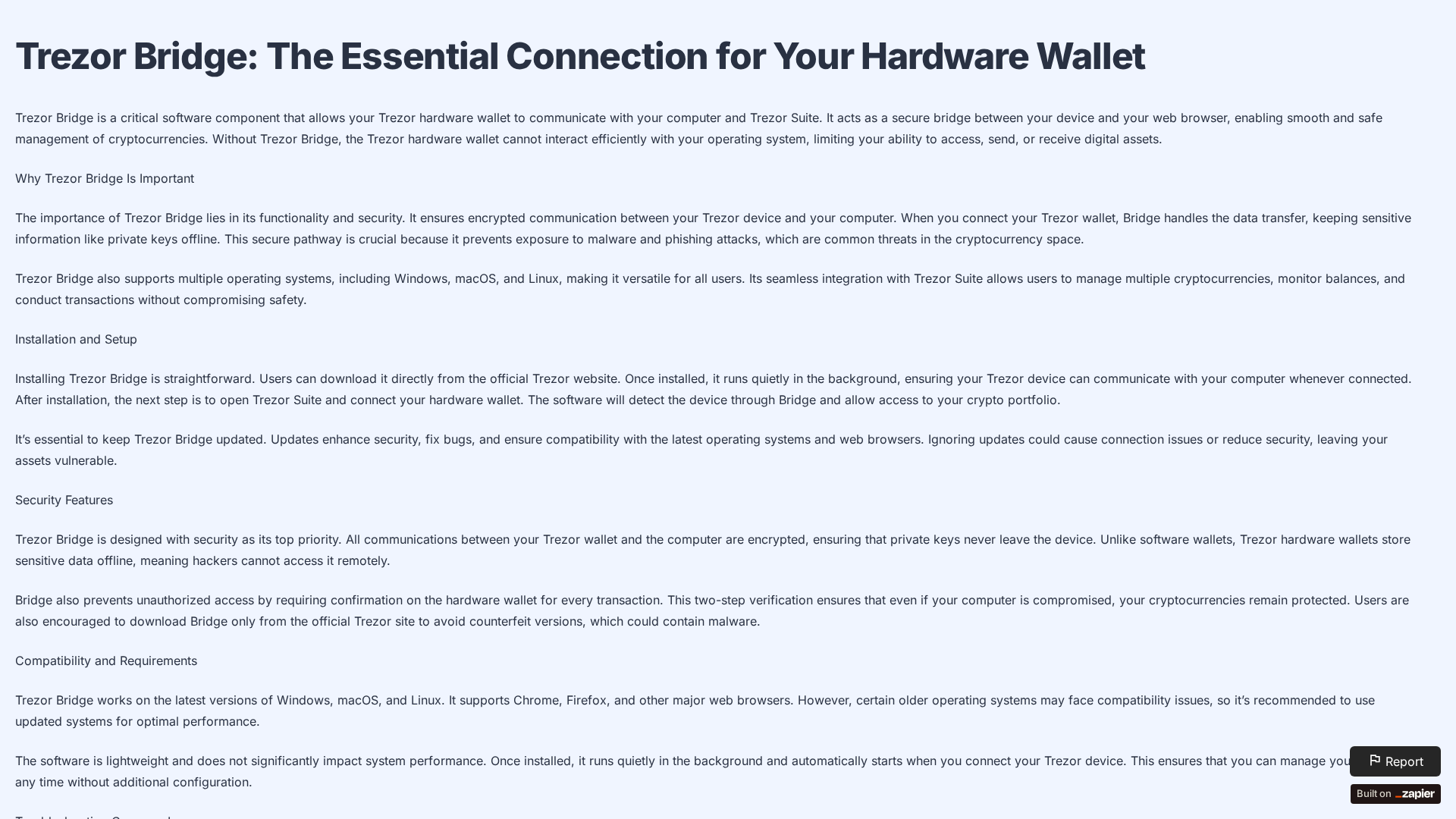
Información de Detección
http://en-bridge-trezor.zapier.app/
Detected Brand
Trezor
Country
Unknown
Confianza
100%
HTTP Status
200
Report ID
19e9512f-be2…
Analyzed
2026-06-29 22:20
Final URL (after redirects)
https://en-bridge-trezor.zapier.app/
Hashes de Contenido (Similitud HTML)
Used to detect similar phishing pages based on HTML content
| Algorithm | Hash Value |
|---|---|
|
CONTENT
TLSH
|
T1B5723D7EB2283370464343E6EF5122F9B32351BDD7115B9CD6788208B3959ED8672DC6 |
|
CONTENT
ssdeep
|
192:QoloB6CJ54t94lnSmA0wF79nQc1xkd6mRasc5Dku9cuGRmKbMpBXp7sfgg8gk:Q6oC0SD0MJQc1adLa55wsmMpBZ7eg/B |
Hashes Visuales (Similitud de Captura)
Used to detect visually similar phishing pages based on screenshots
| Algorithm | Hash Value |
|---|---|
|
VISUAL
pHash
|
852a552a55abd5ea |
|
VISUAL
aHash
|
03033f7f7f3f7f7e |
|
VISUAL
dHash
|
13d3c7c787f9d9c2 |
|
VISUAL
wHash
|
030701477f153f7e |
|
VISUAL
colorHash
|
07007000000 |
|
VISUAL
cropResistant
|
13d3c7c787f9d9c2 |
Análisis de Código
Risk Score
100/100
Nivel de Amenaza
ALTO
⚠️ Phishing Confirmed
🎣 Credential Harvester
🎣 OTP Stealer
🎣 Card Stealer
🎣 Banking
🎣 Personal Info
WebSocket C2
🔒 Obfuscation Detected
- atob
- eval
- fromCharCode
- unescape
- hex_escape
- unicode_escape
- base64_strings
📡 API Calls Detected
- GET
- https://zapier.com/api/v4/session/
- POST
- https://interfaces-report.zapier.app/report-form
📊 Desglose de Puntuación de Riesgo
Total Risk Score
100/100
Contributing Factors
Active Phishing Kit
Detected kit types: Credential Harvester, OTP Stealer, Card Stealer, Banking, Personal Info
Credential Harvesting
Credential harvesting detected with 1 form(s) capturing sensitive data
Real-time C2
WebSocket-based Command & Control infrastructure for real-time victim monitoring
Code Obfuscation
JavaScript code obfuscated using 485 technique(s) to evade detection
🔬 Análisis Integral de Amenazas
Tipo de Amenaza
Banking Credential Harvester
Objetivo
Trezor users
Método de Ataque
credential harvesting forms + real-time WebSocket exfiltration + obfuscated JavaScript
Canal de Exfiltración
WebSocket (1 endpoints)
Evaluación de Riesgo
CRITICAL - Automated credential harvesting with WebSocket (1 endpoints)
⚠️ Indicators of Compromise
- Kit types: Credential Harvester, OTP Stealer, Card Stealer, Banking, Personal Info
- 485 obfuscation techniques
🏢 Análisis de Suplantación de Marca
Impersonated Brand
Trezor
Official Website
N/A
Fake Service
Banking/payment service
⚔️ Metodología de Ataque
Primary Method: Credential Harvesting
Victim enters username and password into fake login form. Credentials are captured via JavaScript and exfiltrated to attacker's server in real-time.
Secondary Method: JavaScript Obfuscation
Malicious code is obfuscated using 485 techniques to evade detection by security scanners and make reverse engineering more difficult.
Target Blockchain
Multiple blockchains
Whitelist Bypass
YES
Drainer supports multiple blockchain networks and checks for high-value tokens on each chain before executing drain operations.
🌐 Indicadores de Compromiso de Infraestructura
Domain Information
Dominio
en-bridge-trezor.zapier.app
Registered
Unknown
Registrar
Unknown
Estado
Age unknown
Hosting Information
Provider
Unknown
ASN
🤖 AI-Extracted Threat Intelligence

"Nunca pensé que me pasaría a mí"
Esto dicen las 2.3 millones de víctimas cada año. No esperes a ser una estadística.