
Phishing Analysis
Detailed analysis of captured phishing page
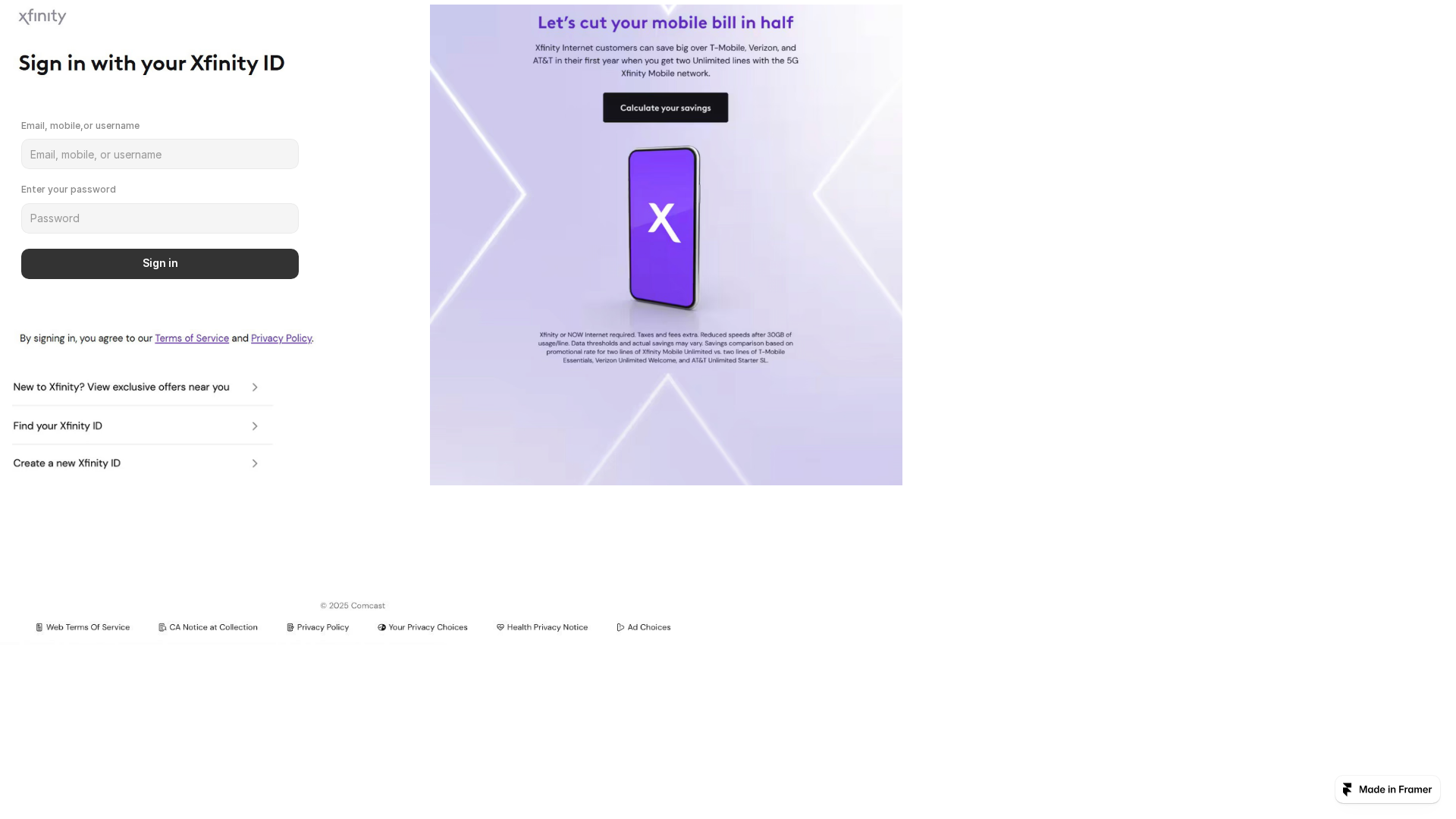
Captura Visual
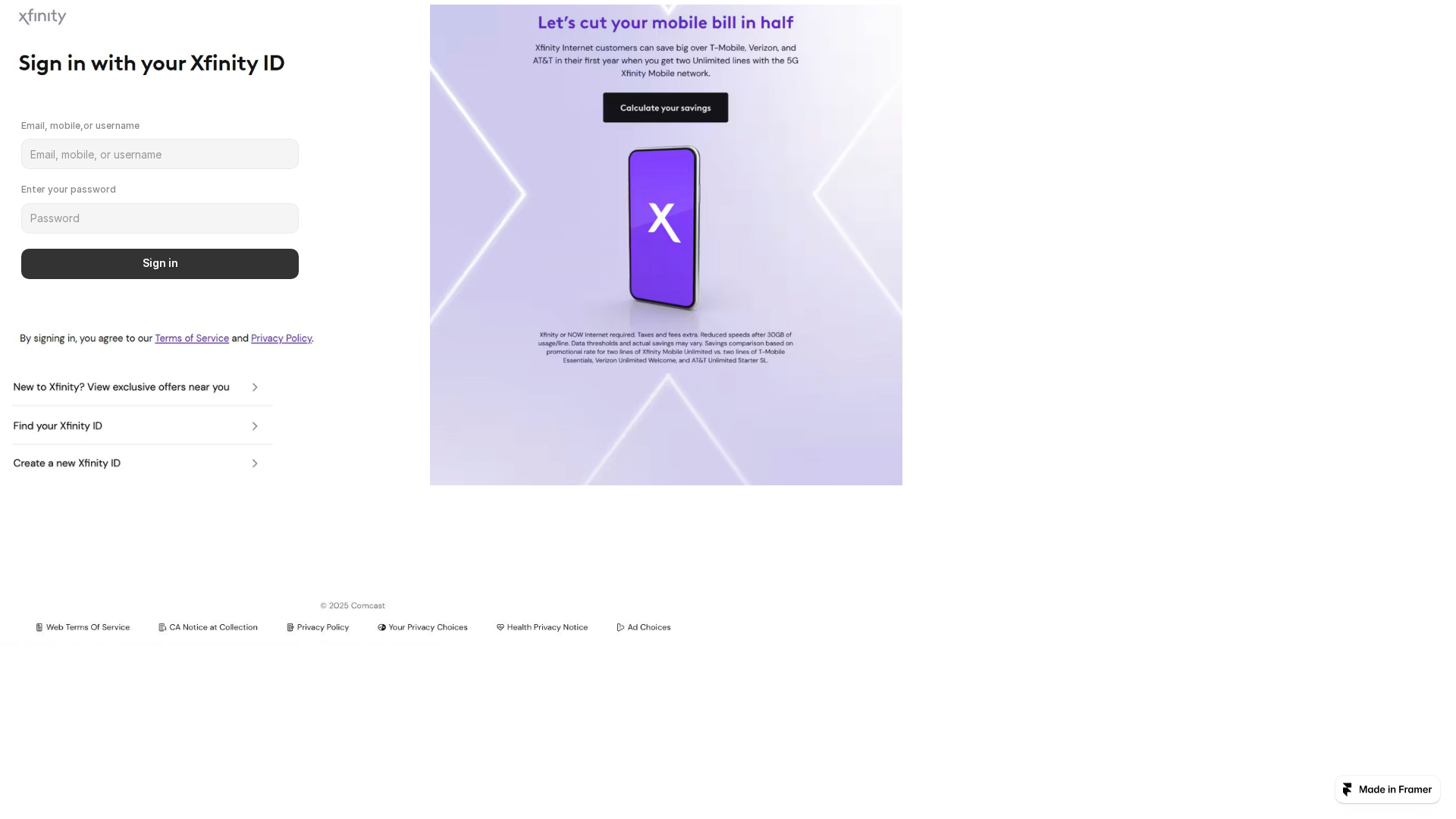
Informações de Detecção
https://organic-predict-088330.framer.app/
Detected Brand
Xfinity
Country
USA
Confiança
100%
HTTP Status
200
Report ID
242a457c-885…
Analyzed
2026-01-29 18:26
Hashes de Conteúdo (Similaridade HTML)
Used to detect similar phishing pages based on HTML content
| Algorithm | Hash Value |
|---|---|
|
CONTENT
TLSH
|
T17C526233A104DC2A4EAB95C8F2C0A5C9505DD345FB3148CAB2A491FF7BC5CF169A536D |
|
CONTENT
ssdeep
|
192:WXSa3Jcd+XnywebDvDMcnthWeNWb3r85Xt/awVfMmUU8VCoRkZ0FQgEc:1mnyLPYr8tt/awVfMmUFCoR |
Hashes Visuais (Similaridade de Captura)
Used to detect visually similar phishing pages based on screenshots
| Algorithm | Hash Value |
|---|---|
|
VISUAL
pHash
|
b333d9ccf40e0f06 |
|
VISUAL
aHash
|
47c70747c7ffffff |
|
VISUAL
dHash
|
9c9cdc8d8d203800 |
|
VISUAL
wHash
|
07070707079f0ffe |
|
VISUAL
colorHash
|
07000000030 |
|
VISUAL
cropResistant
|
9c9cdc8d8d203800 |
Análise de Código
Risk Score
76/100
Nível de Ameaça
ALTO
⚠️ Phishing Confirmed
🎣 Credential Harvester
🎣 OTP Stealer
🎣 Personal Info
🔬 Threat Analysis Report
• Ameaça: Phishing de credenciais
• Alvo: Usuários da Xfinity
• Método: Imitação da página de login da Xfinity.
• Exfil: As credenciais roubadas.
• Indicadores: Domínio não relacionado, formulário de coleta de credenciais, Javascript ofuscado.
• Risco: ALTO
🔒 Obfuscation Detected
- fromCharCode
- base64_strings
📊 Detalhamento da Pontuação de Risco
Total Risk Score
90/100
Contributing Factors
Unrelated Domain
The domain organic-predict-088330.framer.app is not affiliated with Xfinity.
Credential Harvesting Form
The page has a login form requesting sensitive information (email/username and password).
JavaScript Obfuscation
Obfuscated Javascript code is a common indicator of malicious intent.
Free Hosting
Hosted on Framer.app, which is frequently used for malicious activity.
🔬 Análise Integral de Ameaças
Tipo de Ameaça
Two-Factor Authentication Stealer
Alvo
Xfinity users (USA)
Método de Ataque
Brand impersonation + credential harvesting forms + obfuscated JavaScript
Canal de Exfiltração
Form submission (backend endpoint not detected - likely JavaScript-based)
Avaliação de Risco
HIGH - Automated credential harvesting with Form submission (backend endpoint not detected - likely JavaScript-based)
⚠️ Indicators of Compromise
- Kit types: Credential Harvester, OTP Stealer, Personal Info
- 10 obfuscation techniques
🏢 Análise de Falsificação de Marca
Impersonated Brand
Xfinity
Official Website
https://www.xfinity.com/
Fake Service
Xfinity Login
⚔️ Metodologia de Ataque
Primary Method: Credential Harvesting
The attacker sets up a fake Xfinity login page and harvests user credentials when entered. The stolen credentials could be used for identity theft, fraud, or gaining access to user accounts.
Secondary Method: JavaScript Obfuscation
The JavaScript is likely obfuscated to hide malicious code from detection.
🌐 Indicadores de Compromisso de Infraestrutura
Domain Information
Domínio
organic-predict-088330.framer.app
Registered
None
Registrar
None
Estado
None
🔬 JavaScript Deep Analysis
Operator Language
English (1%)
Total Code Size
25,7 KB
🔗 API Endpoints Detected
Other
4
🔐 Obfuscation Detected
- : Light
- : Light
🤖 AI-Extracted Threat Intelligence
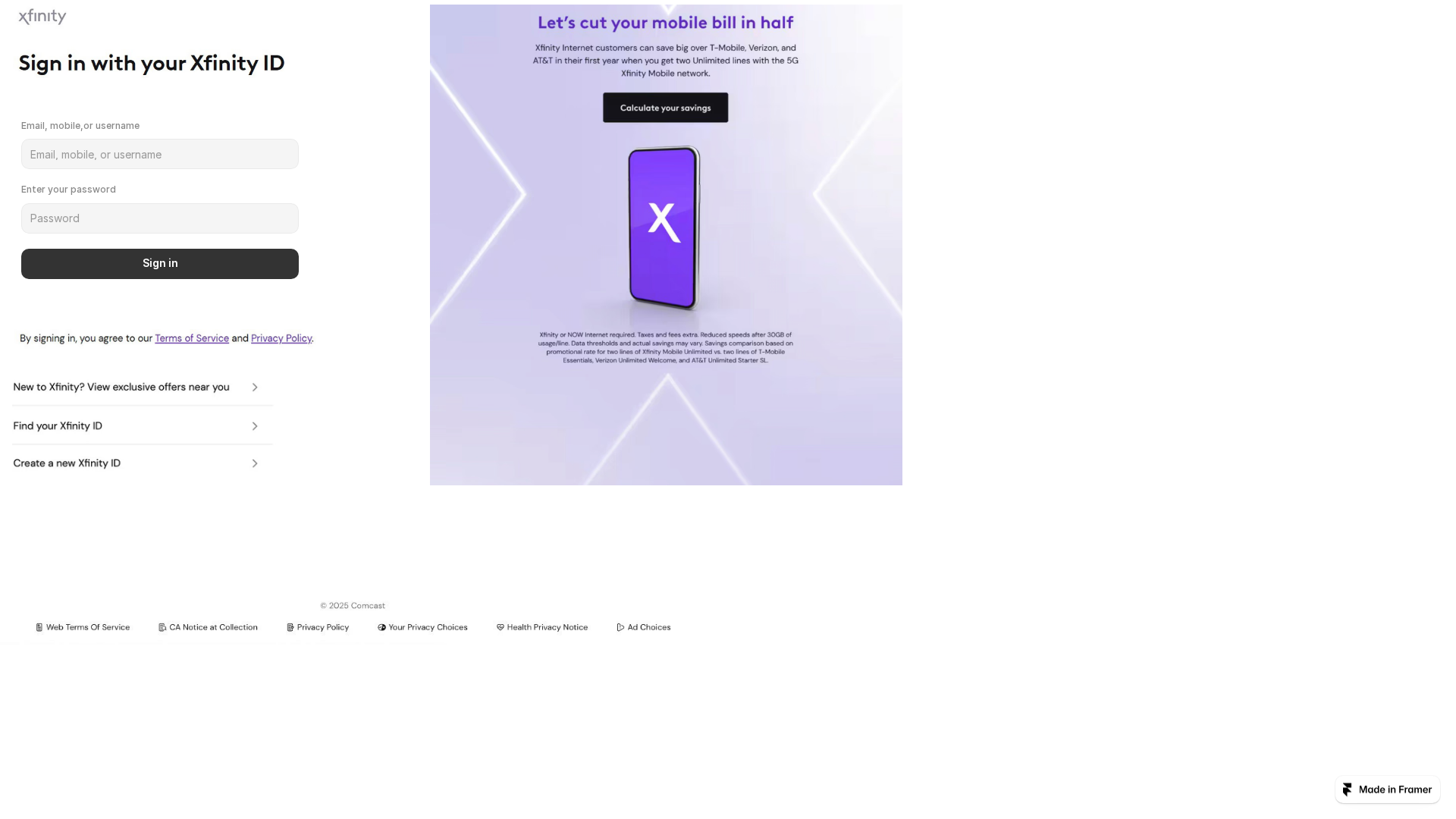
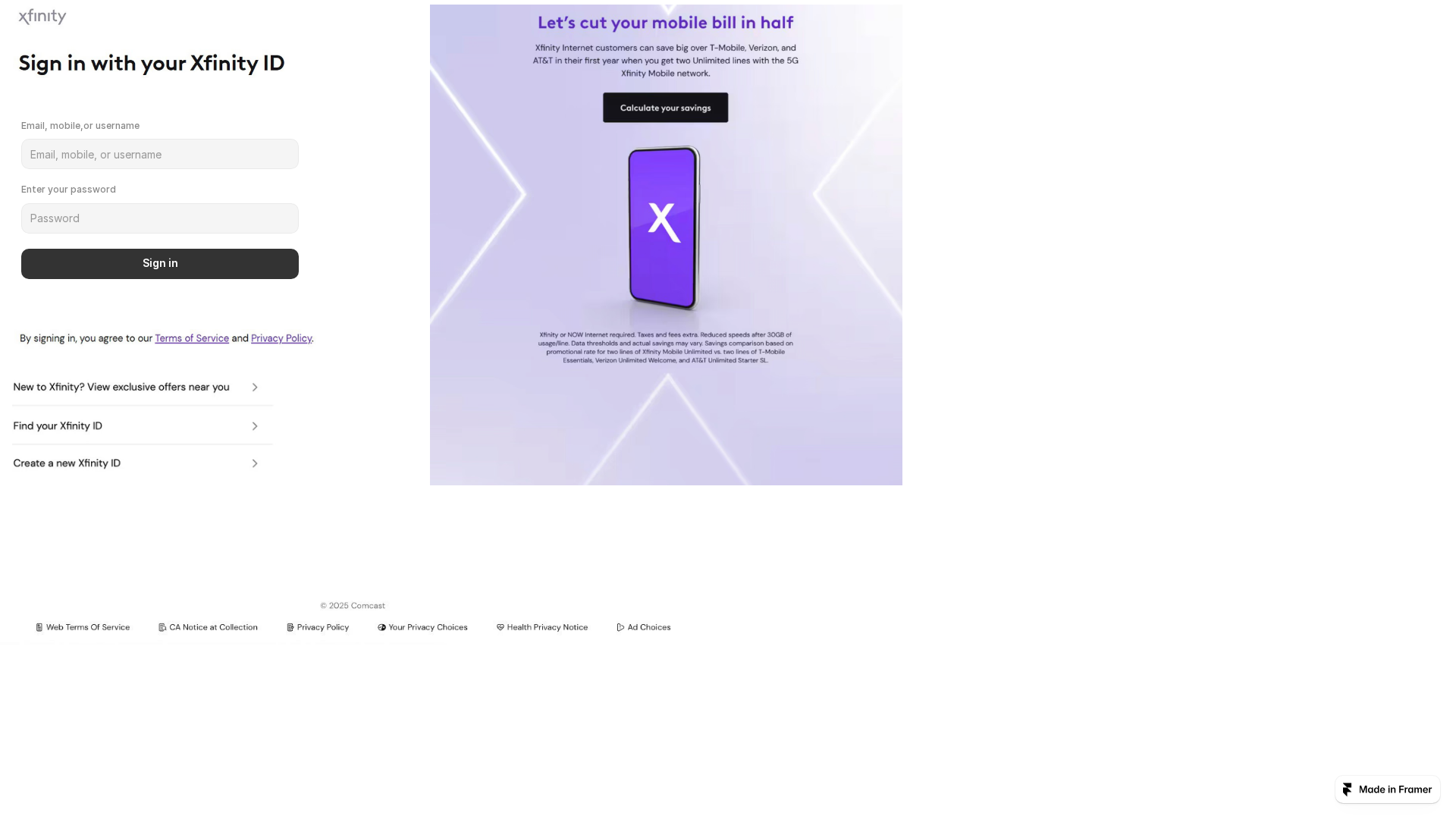
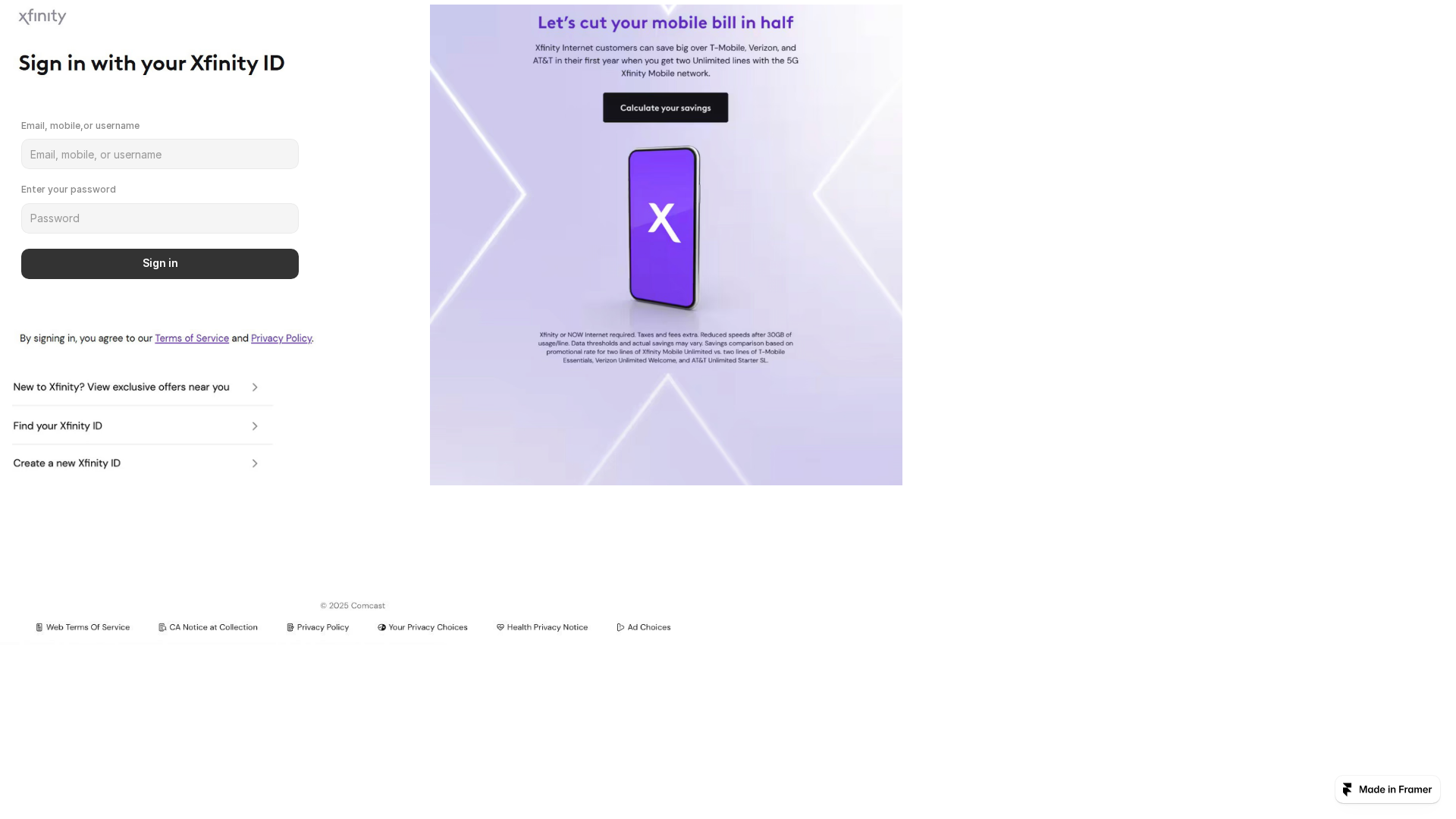
Similar Websites
Pages with identical visual appearance (based on perceptual hash)

"Nunca pensei que aconteceria comigo"
Isso dizem os 2,3 milhões de vítimas a cada ano. Não espere para ser uma estatística.