
Phishing Analysis
Detailed analysis of captured phishing page
Captura Visual
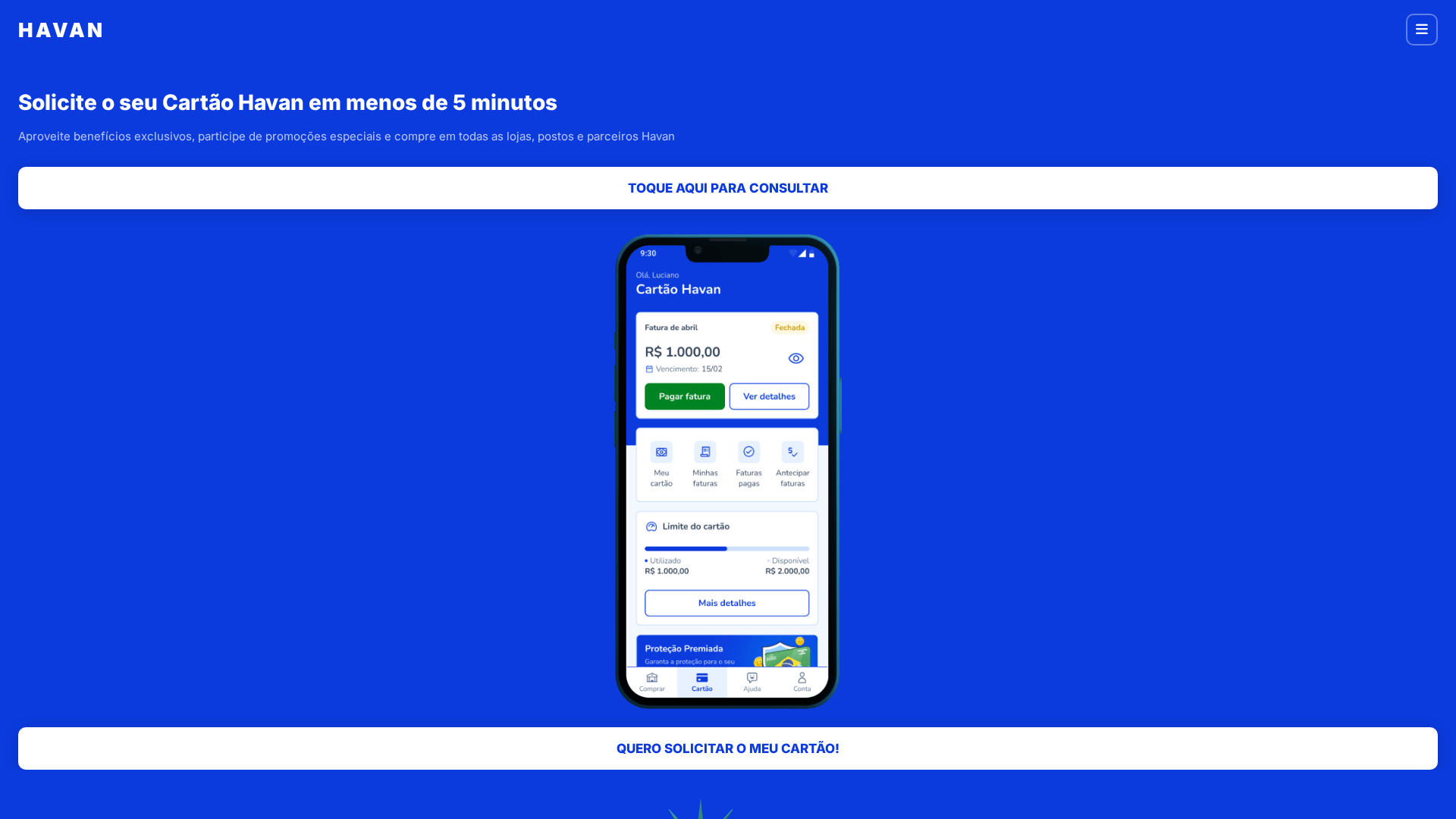
Informações de Detecção
https://havancartaolimitecard.vercel.app/
Detected Brand
Havan
Country
Unknown
Confiança
95%
HTTP Status
200
Report ID
71f10abc-27f…
Analyzed
2026-07-16 20:09
Hashes de Conteúdo (Similaridade HTML)
Used to detect similar phishing pages based on HTML content
| Algorithm | Hash Value |
|---|---|
|
CONTENT
TLSH
|
T178026230E144B93BB157E9C4E694CB8B70C18746C297DF4087F653BAE9CBDF29A1024A |
|
CONTENT
ssdeep
|
96:MuwebOULS1hBWYe5Yu8pjZnwX30pKbMtSdwY/nZIq/ww/c3/b1:IebOULSzUY4YXpjZnwX30pKJdwYhkZJ |
Hashes Visuais (Similaridade de Captura)
Used to detect visually similar phishing pages based on screenshots
| Algorithm | Hash Value |
|---|---|
|
VISUAL
pHash
|
d966e64839192eb6 |
|
VISUAL
aHash
|
00ff1a18181818ff |
|
VISUAL
dHash
|
41ceb432b2b2b28c |
|
VISUAL
wHash
|
80fff718181818ff |
|
VISUAL
colorHash
|
010000001c0 |
|
VISUAL
cropResistant
|
8000b08c8c8c0088,b09ade543a704d5c,88008c8c8cb00080,41ceb432b2b2b28c |
Análise de Código
Risk Score
20/100
Nível de Ameaça
ALTO
⚠️ Phishing Confirmed
📡 API Calls Detected
- https://ipapi.co/json/
📊 Detalhamento da Pontuação de Risco
Total Risk Score
40/100
🔬 Análise Integral de Ameaças
Tipo de Ameaça
Havan Phishing Landing Page
Alvo
Havan users
Método de Ataque
Phishing webpage
Canal de Exfiltração
Form submission (backend endpoint not detected - likely JavaScript-based)
Avaliação de Risco
LOW - Automated credential harvesting with Form submission (backend endpoint not detected - likely JavaScript-based)
🏢 Análise de Falsificação de Marca
Impersonated Brand
Havan
Official Website
N/A
Fake Service
Credential harvesting service
⚔️ Metodologia de Ataque
Primary Method: Search Engine Manipulation
Fake Havan site positioned to capture victims through SEO tactics, typosquatting, or paid advertising. Serves as entry point for multi-stage attacks including credential theft and malware distribution.
Secondary Method: Client-Side Form Interception
JavaScript intercepts form submissions before they reach the fake backend. This allows real-time credential harvesting and validation without server round-trips.
🌐 Indicadores de Compromisso de Infraestrutura
Domain Information
Domínio
havancartaolimitecard.vercel.app
Registered
Unknown
Registrar
Unknown
Estado
Hosting platform (subdomain)
Hosting Information
Provider
Unknown
ASN
🤖 AI-Extracted Threat Intelligence
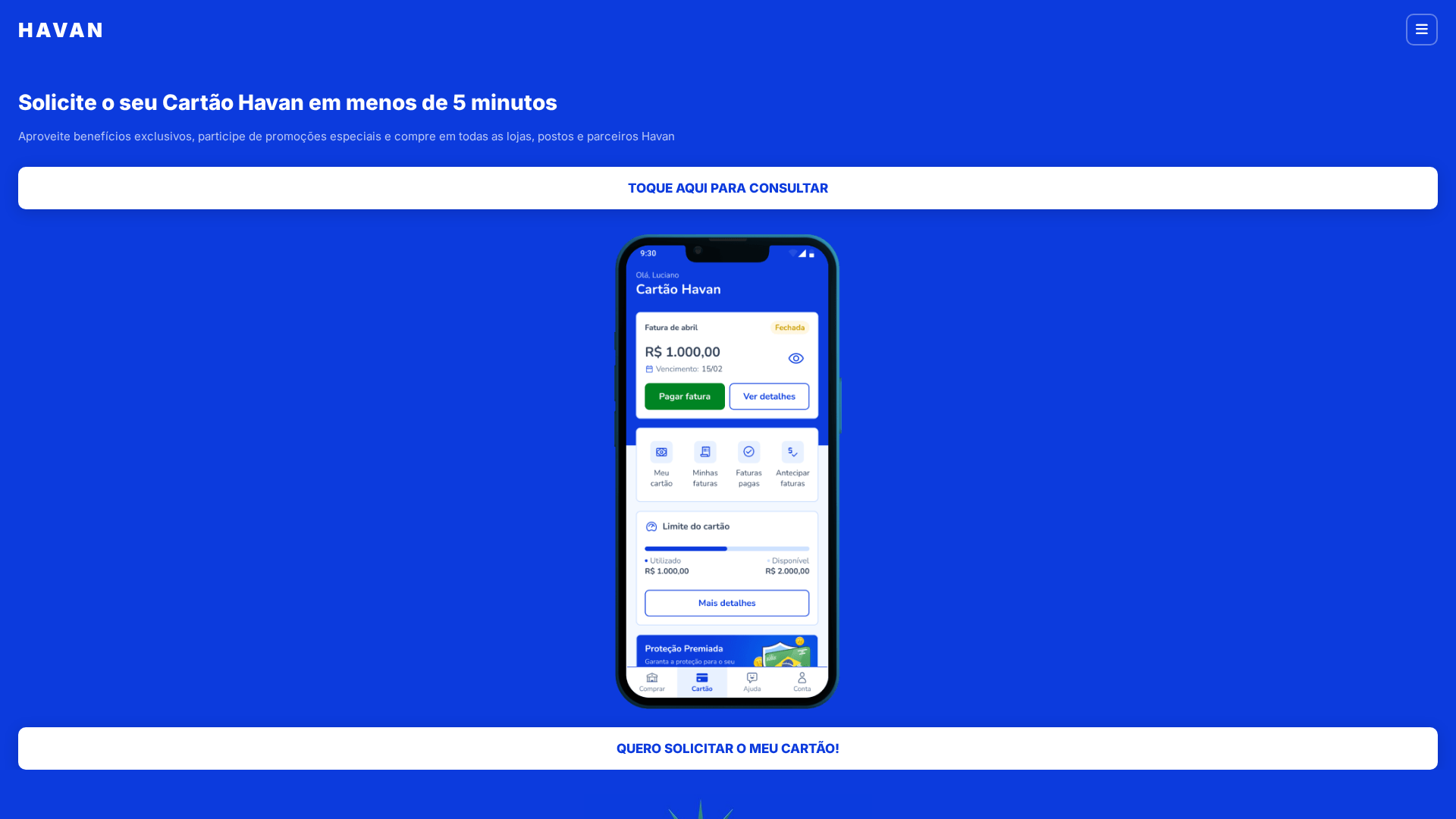
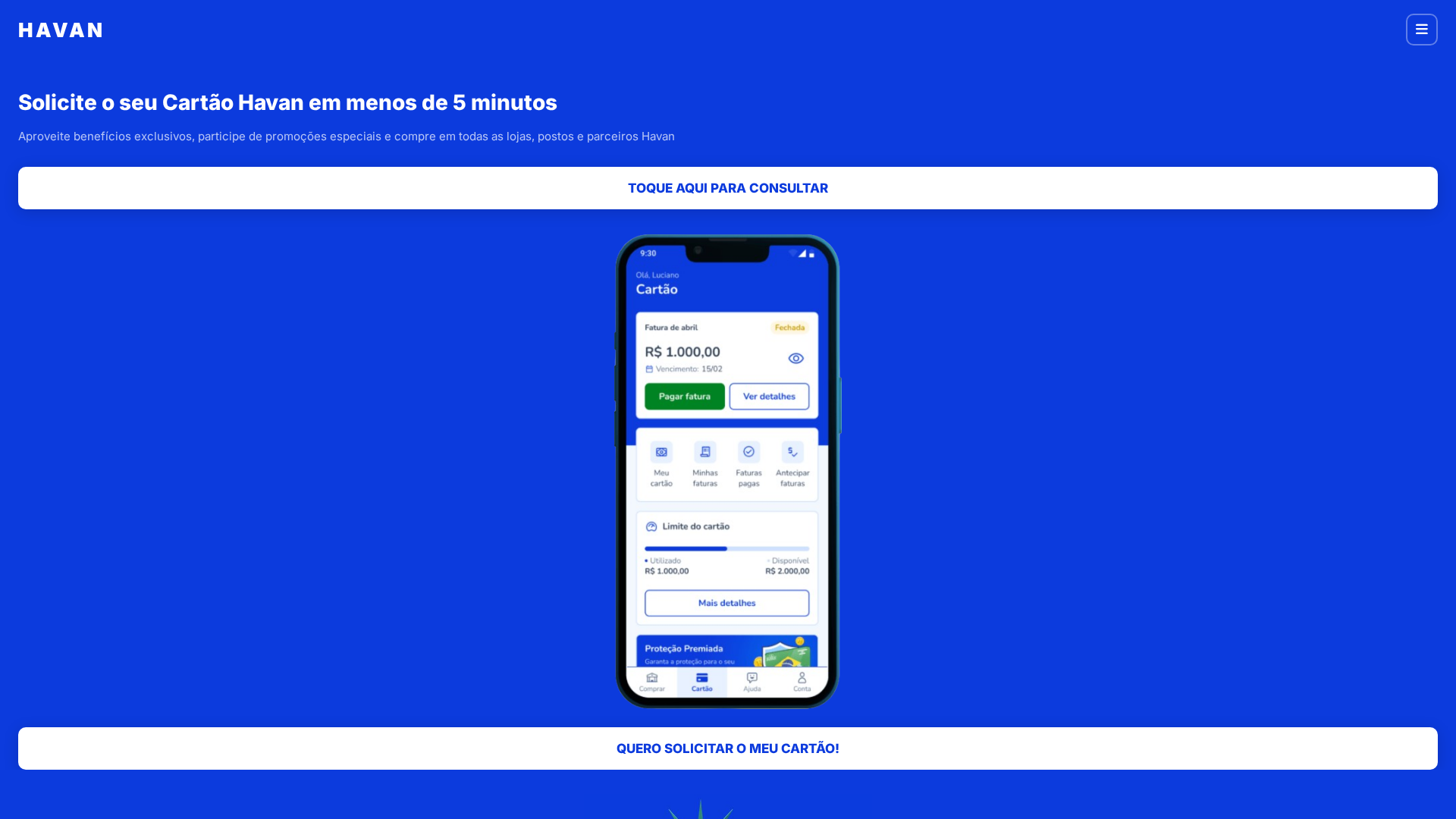
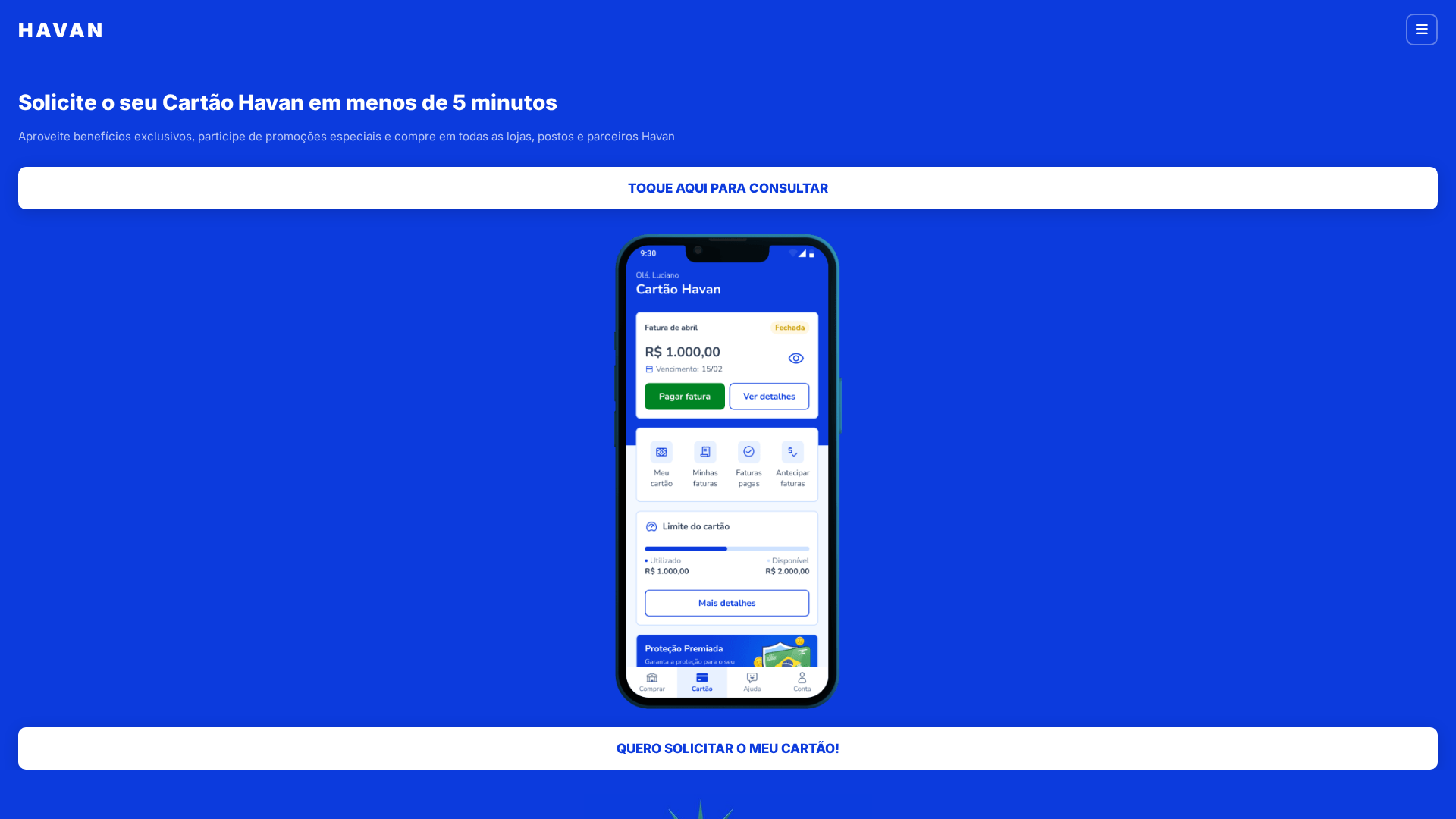
Similar Websites
Pages with identical visual appearance (based on perceptual hash)

"Nunca pensei que aconteceria comigo"
Isso dizem os 2,3 milhões de vítimas a cada ano. Não espere para ser uma estatística.