
Phishing Analysis
Detailed analysis of captured phishing page
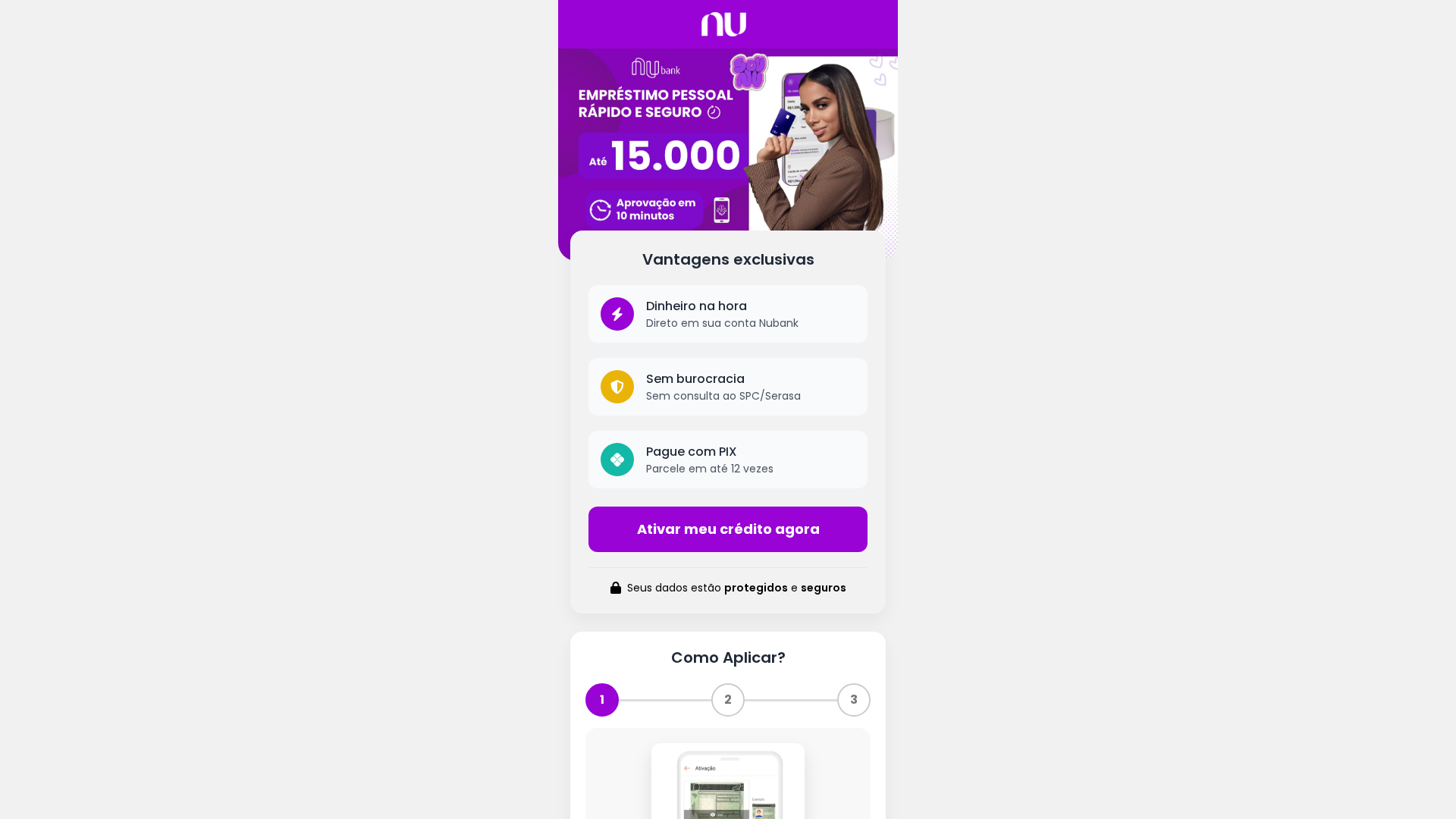
Captura Visual
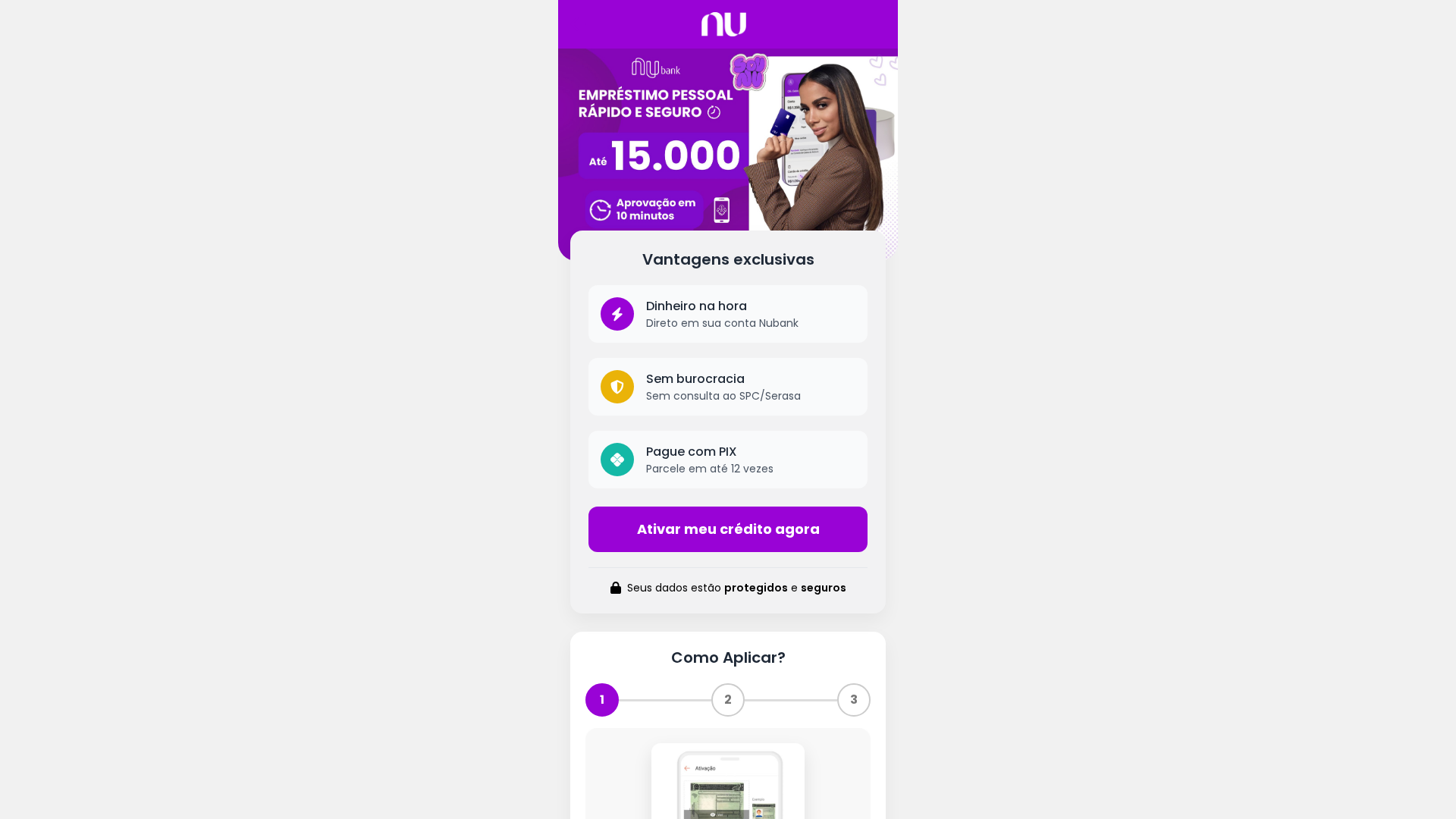
Informações de Detecção
https://emprestimoliberado.com/inicio/01/
Detected Brand
Nubank
Country
International
Confiança
100%
HTTP Status
200
Report ID
8c0b88f5-f7f…
Analyzed
2026-02-13 16:09
Hashes de Conteúdo (Similaridade HTML)
Used to detect similar phishing pages based on HTML content
| Algorithm | Hash Value |
|---|---|
|
CONTENT
TLSH
|
T1F832EB7072901ABB91CBD2E1B275AF5A72C8CB4BCA5BD701A3F983845FC7C92DD48254 |
|
CONTENT
ssdeep
|
192:hZLLSPaLKGHnC//swsIwaocZ4J3u5uxTRWAwzDfS:nL6QHnC3swRZITJRWAwzDq |
Hashes Visuais (Similaridade de Captura)
Used to detect visually similar phishing pages based on screenshots
| Algorithm | Hash Value |
|---|---|
|
VISUAL
pHash
|
b3333333c9cc6664 |
|
VISUAL
aHash
|
e7e7e7ffe7e7ffff |
|
VISUAL
dHash
|
4d4d4d124c4d120a |
|
VISUAL
wHash
|
0707272f07072f3f |
|
VISUAL
colorHash
|
07200000030 |
|
VISUAL
cropResistant
|
4d4d4d124c4d120a,33f4d989f9e5cdd9 |
Análise de Código
Risk Score
76/100
Nível de Ameaça
ALTO
⚠️ Phishing Confirmed
🎣 Credential Harvester
🎣 OTP Stealer
🎣 Banking
🎣 Personal Info
🔬 Threat Analysis Report
• Ameaça: Phishing
• Alvo: Clientes Nubank
• Método: Imitação e ofertas de empréstimos atrativas
• Exfil: Desconhecido, provavelmente roubará credenciais e informações pessoais.
• Indicadores: Idade do domínio, ofuscação, imitação da marca.
• Risco: Alto
🔒 Obfuscation Detected
- fromCharCode
- unicode_escape
🎯 Kit Endpoints
- https://evilmartians.com/chronicles/postcss-8-plugin-migration`),m.env.LANG&&m.env.LANG.startsWith(
- https://tailwindcss.com/docs/content-configuration#safelisting-classes
- https://tailwindcss.com`}),...e.nodes])},container:(()=
- https://tailwindcss.com/docs/content-configuration
- https://mths.be/cssesc
- https://tailwindcss.com/docs/content-configuration#discarding-classes
- https://tailwindcss.com/docs/upgrade-guide#prefix-cannot-be-a-function
- https://tailwindcss.com/docs/upgrade-guide#configure-content-sources
- https://tailwindcss.com/docs/using-with-preprocessors#nesting
- https://searchapi.dnnl.live/consulta?cpf=${cpf}&token_api=2077`
- https://cdn.tailwindcss.com/
- https://emprestimoliberado.com/inicio/01/js/B7PYnCHDexx2.js
- https://tailwindcss.com/docs/upgrade-guide#remove-dark-mode-configuration
- https://www.w3ctech.com/topic/2226`));let
- https://tailwindcss.com/docs/content-configuration#pattern-recommendations
- https://twitter.com/browserslist
- https://tailwindcss.com/docs/upgrade-guide#replace-variants-with-layer
- https://tailwindcss.com/docs/installation
📡 API Calls Detected
- POST
📊 Detalhamento da Pontuação de Risco
Total Risk Score
90/100
Contributing Factors
Recent Domain
The domain is very new which is a common indicator of phishing sites.
Domain Mismatch
The domain name doesn't belong to the official brand, this is the most common phishing technique.
Impersonation
The site mimics the appearance of Nubank.
Obfuscation
Obfuscation detected in javascript.
🔬 Análise Integral de Ameaças
Tipo de Ameaça
Banking Credential Harvester
Alvo
Nubank users (International)
Método de Ataque
Brand impersonation + obfuscated JavaScript
Canal de Exfiltração
Form submission (backend endpoint not detected - likely JavaScript-based)
Avaliação de Risco
HIGH - Automated credential harvesting with Form submission (backend endpoint not detected - likely JavaScript-based)
⚠️ Indicators of Compromise
- Kit types: Credential Harvester, OTP Stealer, Banking, Personal Info
- 18 obfuscation techniques
🏢 Análise de Falsificação de Marca
Impersonated Brand
Nubank
Official Website
https://nubank.com.br/
Fake Service
Personal Loans
Fraudulent Claims
⚔️ Metodologia de Ataque
Primary Method: Brand Impersonation
The attacker creates a website that looks like the legitimate Nubank site, offering attractive loan conditions to steal the victim's information. The user is lured to enter sensitive data by imitating the design and content of Nubank.
Secondary Method: Social Engineering
The use of appealing loan offers and the appearance of legitimacy further convinces the user to provide their information.
🌐 Indicadores de Compromisso de Infraestrutura
🦠 Malicious Files
Main File
B7PYnCHDexx2.js
File Size
📊 Diagrama de Fluxo de Ataque
1. Step 1: User lands on page with UTM tracking parameters
2. Step 2: CPF input form is presented with validation and formatting
3. Step 3: User submits CPF via processForm(), which stores it in localStorage
4. Step 4: consultarCPF() sends CPF to external API (searchapi.dnnl.live) to retrieve full personal data (name, mother's name, birth date, gender)
5. Step 5: Retrieved data is displayed to user for 'confirmation' and stored in localStorage as 'dadosUsuario' object
6. Step 6: redirecionarParaChat() redirects user to next stage ('../../inicio/02') with all collected data in localStorage and original URL parameters preserved
7. Step 7: Subsequent stages likely collect banking credentials or other sensitive information
🔬 JavaScript Deep Analysis
Operator Language
Portuguese (1%)
Total Code Size
411,1 KB
🔗 API Endpoints Detected
Other
6
🔐 Obfuscation Detected
- : Moderate
- : None
🤖 AI-Extracted Threat Intelligence
📊 Attack Flow
1. Step 1: User lands on page with UTM tracking parameters
2. Step 2: CPF input form is presented with validation and formatting
3. Step 3: User submits CPF via processForm(), which stores it in localStorage
4. Step 4: consultarCPF() sends CPF to external API (searchapi.dnnl.live) to retrieve full personal data (name, mother's name, birth date, gender)
5. Step 5: Retrieved data is displayed to user for 'confirmation' and stored in localStorage as 'dadosUsuario' object
6. Step 6: redirecionarParaChat() redirects user to next stage ('../../inicio/02') with all collected data in localStorage and original URL parameters preserved
7. Step 7: Subsequent stages likely collect banking credentials or other sensitive information
🎯 Malicious Files Identified
Main Drainer
B7PYnCHDexx2.jsFile Size
~25KB (based on provided code snippets)
Malicious Functions
consultarCPF()redirecionarParaChat()processForm()validateCPF()
Similar Websites
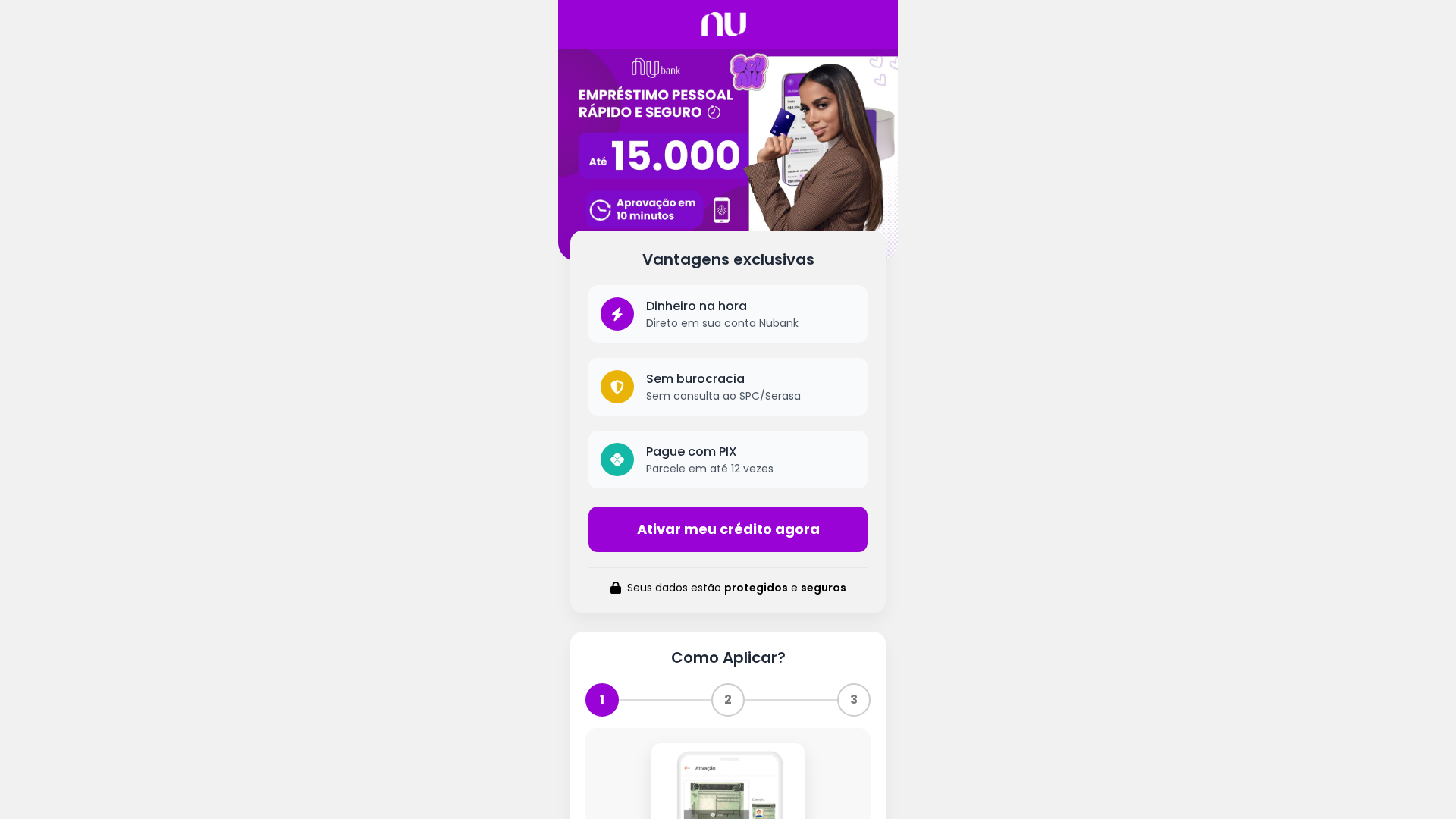
Pages with identical visual appearance (based on perceptual hash)
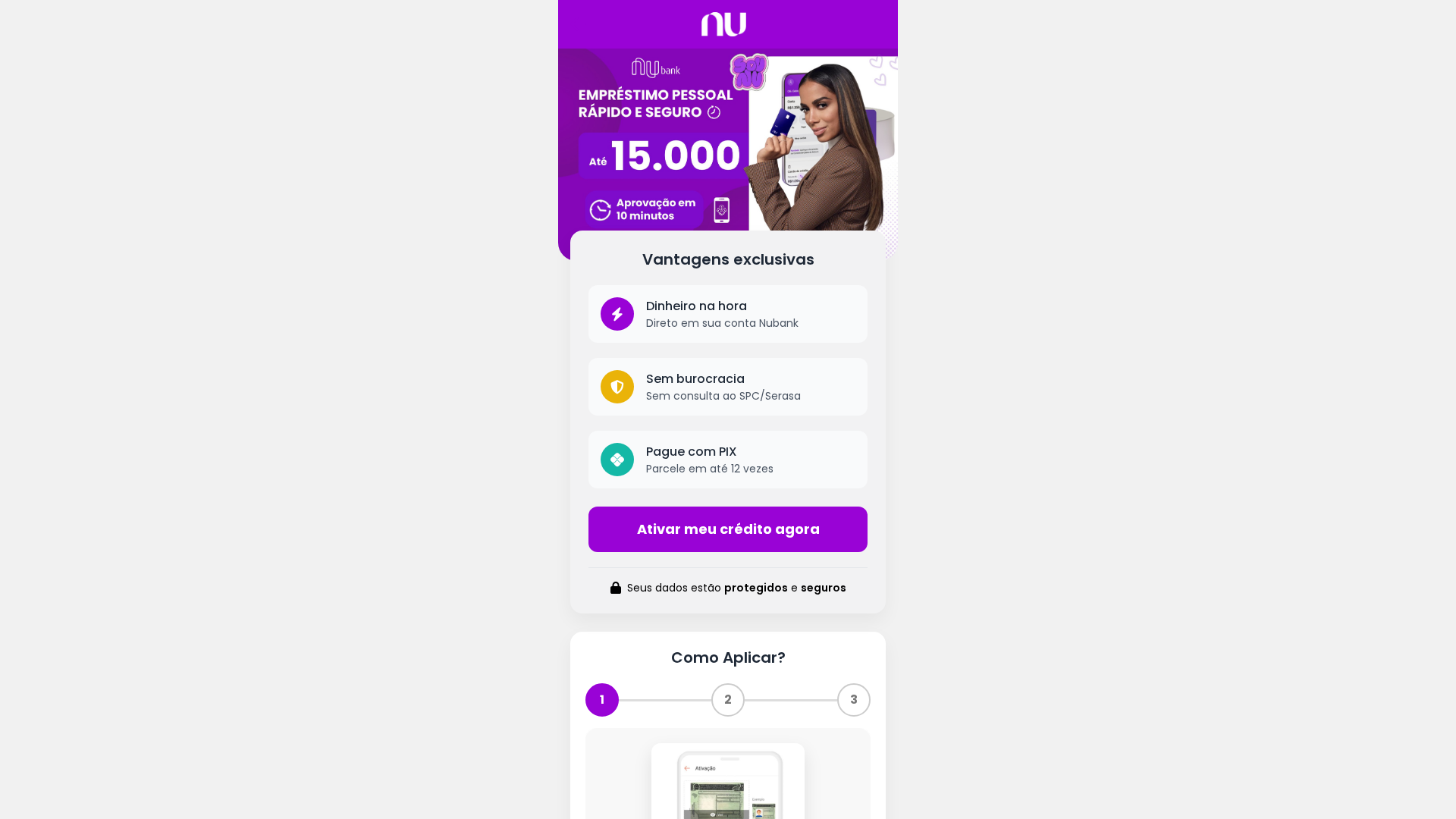
Nubank
https://atendimento.portal-seucredito.com/
Jun 25, 2026
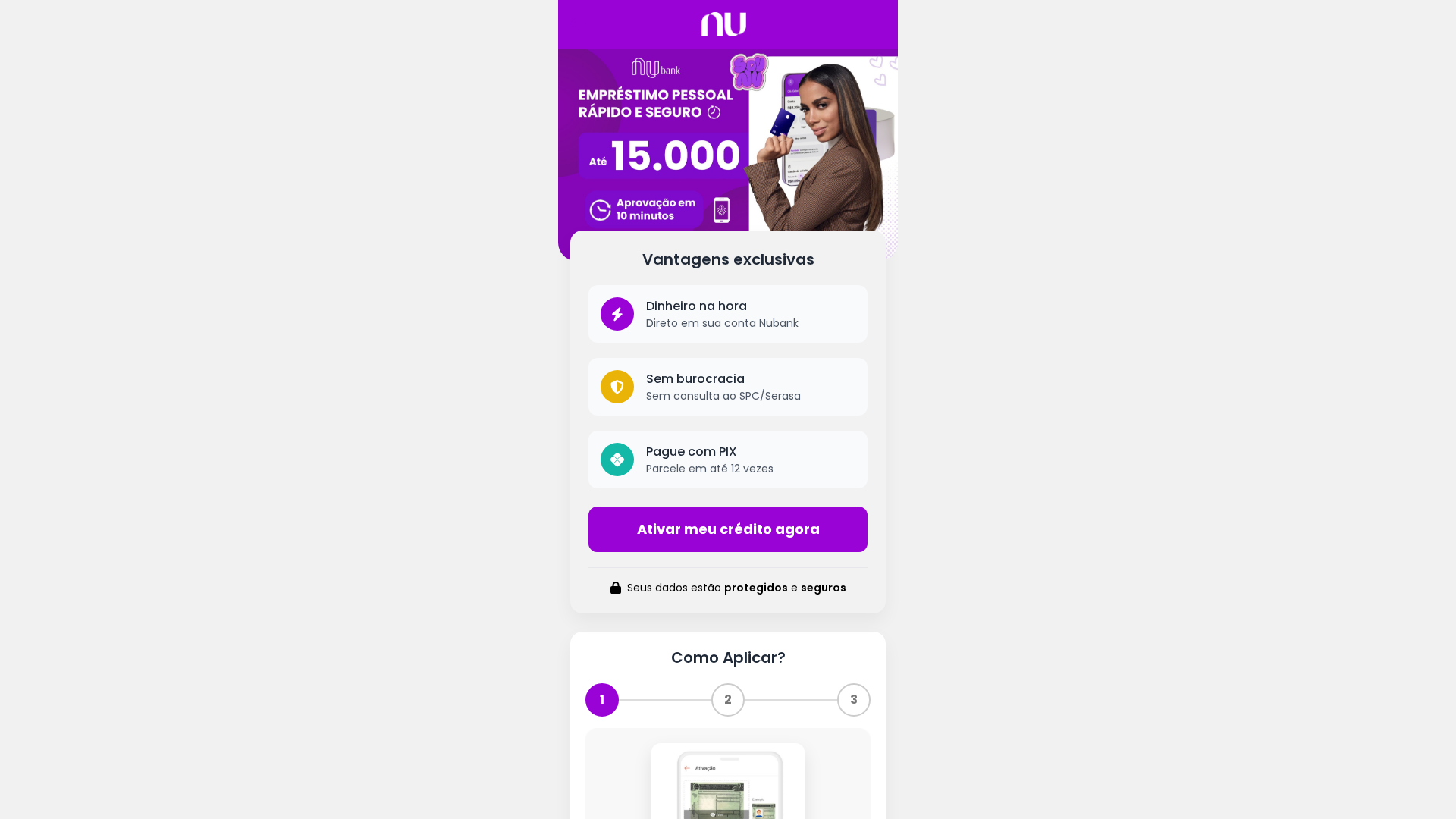
Nubank
https://emprestimo-nu.com/inicio/01/
Fev 18, 2026
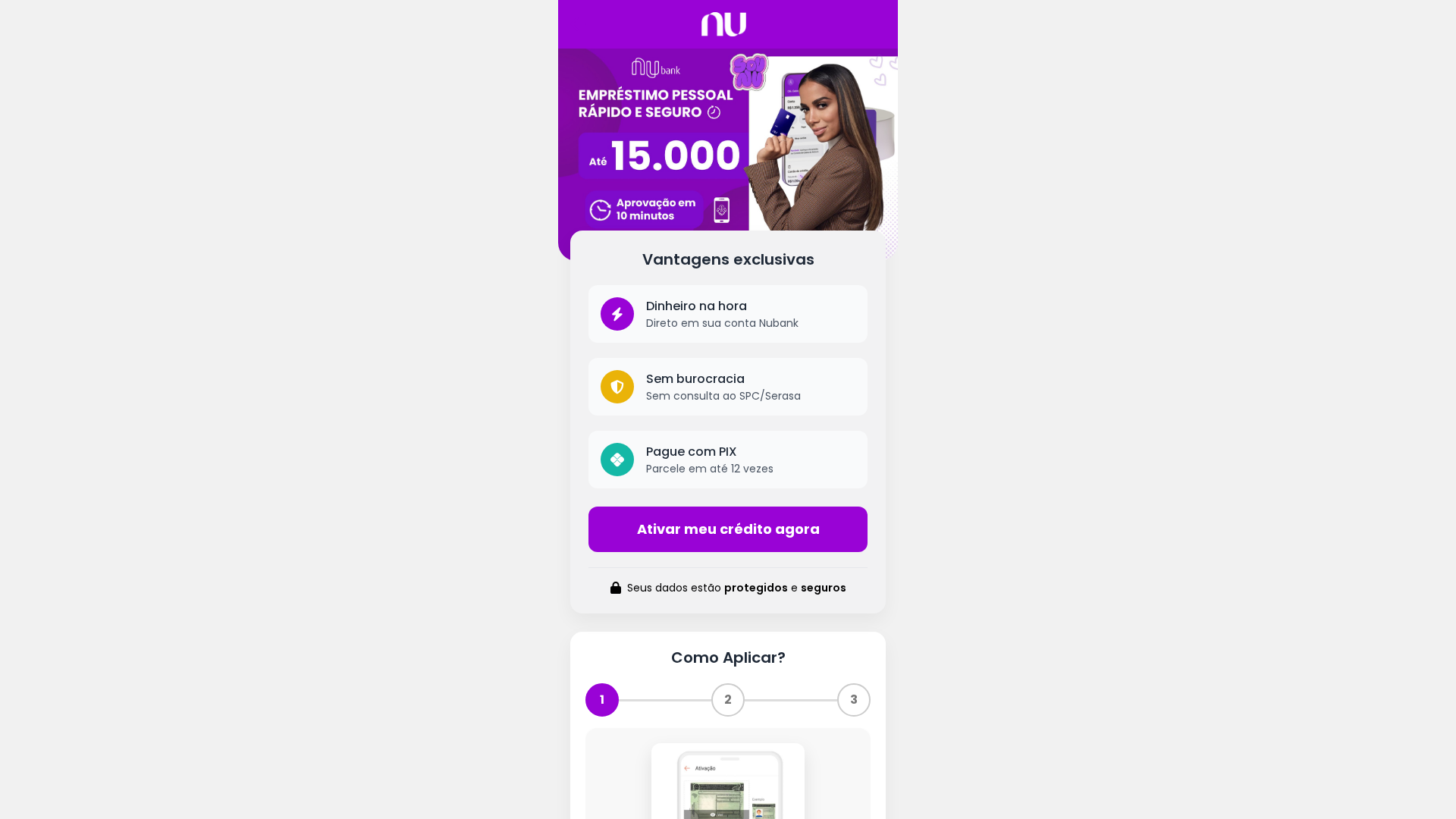
Nubank
https://emprestimoliberado.com/aa/inicio/01/
Fev 12, 2026
Nubank
https://nuudin.site/1/
Fev 12, 2026
NuBank
https://seguniao.pro/inicio/01/?utm_source=google&utm_ca...
Fev 12, 2026
Scan History for emprestimoliberado.com
Found 1 other scan for this domain

"Nunca pensei que aconteceria comigo"
Isso dizem os 2,3 milhões de vítimas a cada ano. Não espere para ser uma estatística.