Part 4: Hardening and Best Practices
This part converts a working setup into a resilient long-term deployment.
1. Security Baseline Profile
Recommended baseline for production-style usage:
suspicious_js_level = balancedcritical_secrets_only_alerts = true- phishing/secrets/malware notification channels enabled
- auto-update enabled for both uBlock and phishing feeds
For higher-risk environments, test strict JS mode carefully before broad rollout.
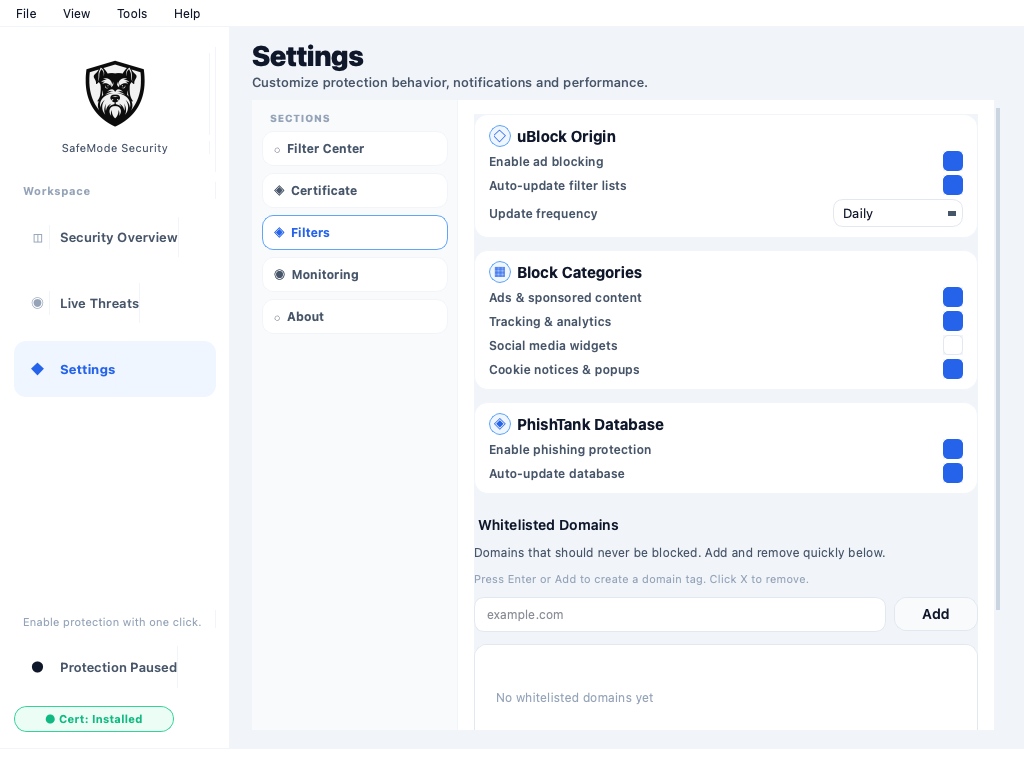
2. Whitelist Governance
Whitelist entries should be treated as security exceptions.
Minimum metadata per entry:
- domain
- owner
- reason
- date added
- review date
Governance rules:
- no broad wildcard behavior
- periodic cleanup of stale entries
- require business sign-off for long-lived exceptions
3. Feed Hygiene and Drift Control
Protection quality depends on feed freshness.
Practices:
- monitor source update timestamps weekly
- run manual update before critical demos/reviews
- investigate repeated source failures immediately
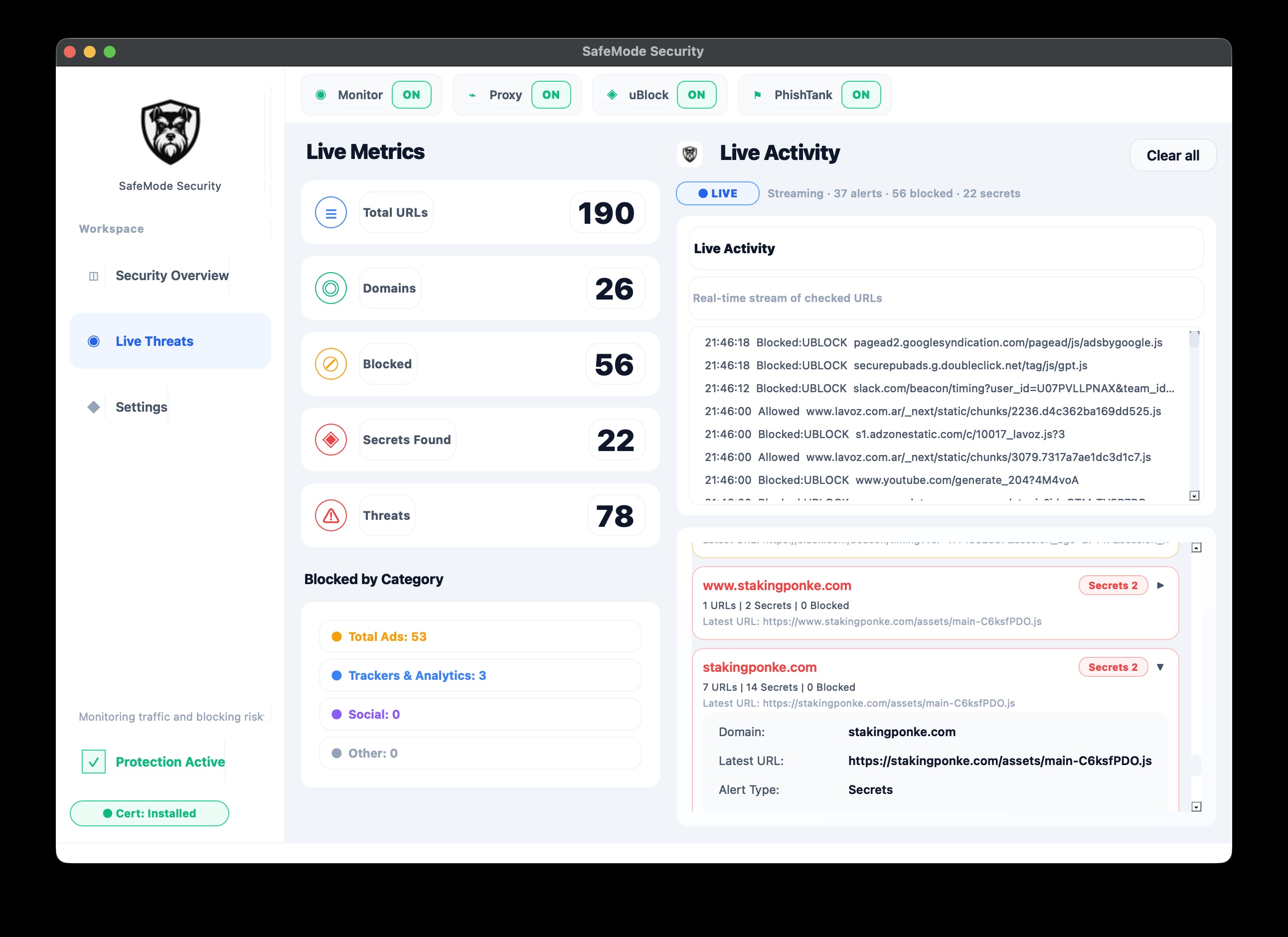
4. Data Protection and Forensics Readiness
Local data paths contain valuable evidence and sensitive context:
data/settings.jsondata/url_monitor.db- filter files under
data/filters/
Hardening actions:
- restrict filesystem access
- back up before major upgrades
- sanitize exports before external sharing
5. Build and Release Hardening
Before release, validate:
- full test suite pass
- strict docs build pass
- monitor/proxy lifecycle on target OS
- certificate flow on clean profile
- artifact checksums
Prefer consolidated release pipeline management to avoid workflow drift.
6. Operational Drill Program
Run periodic drills for:
- phishing event handling
- secret leakage detection workflow
- proxy misconfiguration recovery
- feed-update outage response
Measure:
- time to detect
- time to triage
- time to recover
7. Contributor Hardening Rules
When changing runtime logic:
- update docs in same PR
- add tests for lifecycle coupling changes
- avoid introducing ambiguous alert labels
When changing feed sources:
- update config and feeds reference page together
8. Completion and Next Steps
You now have:
- a validated installation
- controlled filter operations
- incident playbooks
- hardening baseline
Continue with deeper docs: